
Everyday AI Tools People Use Without Realizing It
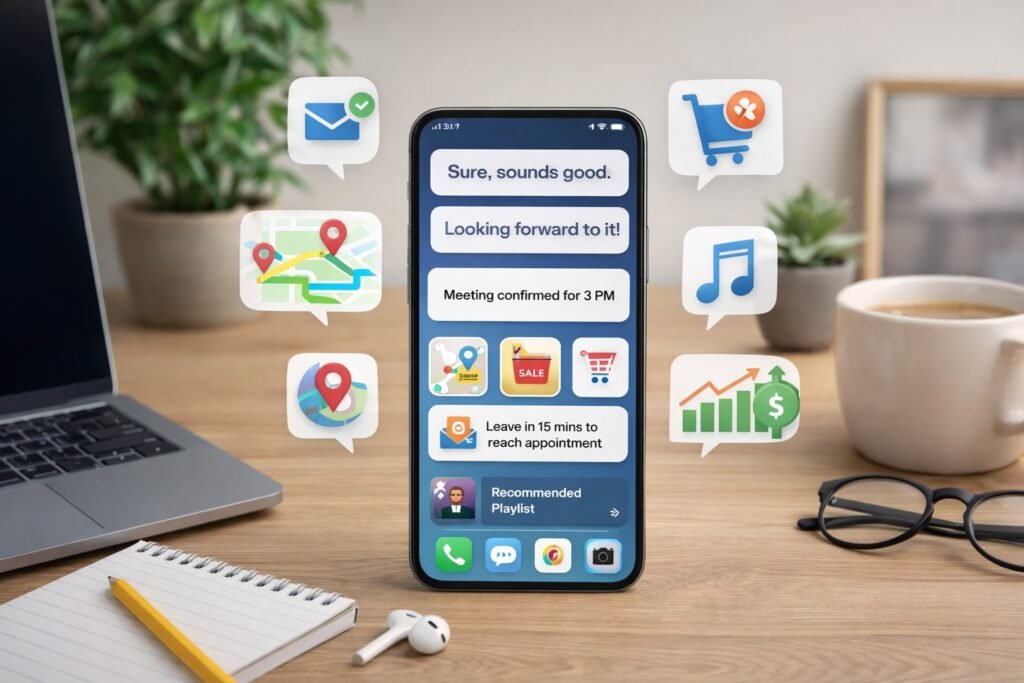 Everyday AI tools are already part of your daily routine—even if you’ve never thought of them that way. From suggested replies on your phone to traffic predictions, shopping recommendations, and automatic reminders, AI quietly works behind the scenes to make everyday life easier. Most people use these everyday AI tools dozens of times a day without ever opening an app labeled “AI.”
If you’ve ever accepted a suggested reply, followed a faster route home, or watched something recommended “just for you,” you’ve already been using AI. This article breaks down where everyday AI actually shows up, how it works behind the scenes, and why it feels so natural.
Why Most People Are Already Using AI
AI isn’t new—it’s just invisible now
Early AI tools were obvious and clunky. Today’s AI is different. It works in the background, improving experiences rather than announcing itself. That invisibility is intentional—it lowers friction and builds trust.
The difference between “AI tools” and “AI-powered features”
Most people think of AI as a standalone tool. In reality, AI is often a feature inside apps you already use—email, maps, photos, shopping, and calendars. You don’t open an “AI app”; AI quietly improves what’s already there.
Why companies embed AI instead of labeling it
AI works best when it reduces steps. Asking users to “turn on AI” creates friction. Embedding AI into existing workflows makes help feel automatic rather than intrusive.
What Counts as “Everyday AI Tools”?
Background automation vs. active AI use
Some AI requires direct interaction, like asking a chatbot a question. Everyday AI usually doesn’t. It watches patterns, learns preferences, and makes small adjustments without asking.
Machine learning, recommendations, and predictions—explained simply
Everyday AI tools look for patterns in behavior. It learns what you open, ignore, repeat, or avoid. Over time, it predicts what you might want next—and offers it quietly.
Why you don’t need to prompt or configure most everyday AI
Unlike advanced AI tools, everyday AI comes pre-configured. It’s designed to work with minimal setup so people benefit without technical knowledge.
Everyday AI Tools on Your Phone
Smartphones are one of the most common places people interact with AI—often dozens of times a day.
Keyboard suggestions, autocorrect, and smart replies
Your phone predicts words, fixes mistakes, and suggests responses based on context. These features use AI models trained on language patterns to save time and reduce effort.
Photo organization, facial recognition, and memory highlights
Photo apps automatically group people, locations, and events. They recognize faces, detect scenes, and surface memories—all powered by AI image recognition.
Voice assistants and contextual reminders
When your phone suggests leaving early for an appointment or reminds you to call someone back, it’s using AI to connect location, timing, and behavior.
Spam detection and call screening
AI filters spam texts, flags suspicious calls, and even screens unknown callers—often before you notice anything was wrong.
AI in Apps People Already Trust
Many everyday apps rely heavily on AI to function smoothly.
Navigation apps predicting traffic and routes
Apps like Google Maps and Waze use AI to predict congestion, accidents, and travel times based on real-time data and historical patterns.
Email filtering, priority inboxes, and summaries
AI decides which emails matter most, filters spam, and increasingly summarizes long threads to reduce reading time.
Calendar scheduling suggestions and time predictions
Calendar apps estimate how long meetings will take, suggest optimal scheduling times, and adjust reminders based on behavior.
Note apps that auto-organize and surface information
AI tags notes, highlights key points, and resurfaces information when it’s likely to be useful.
AI Behind Shopping, Streaming, and Entertainment
If something feels “perfectly timed” or “spot-on,” AI is usually involved.

Product recommendations that adapt to behavior
Online stores track browsing, purchases, and comparisons to suggest items you’re more likely to buy.
Price tracking, deal alerts, and restock predictions
Shopping tools monitor prices, predict drops, and notify you automatically—without constant checking.
Netflix, YouTube, and Spotify personalization
Streaming platforms rely heavily on AI to decide what appears next. Your watch or listen history trains the system continuously.
Why “the algorithm” is just everyday AI tools at work
“The algorithm” isn’t mysterious—it’s simply AI responding to patterns and probabilities to personalize content.
AI Quietly Managing Money and Finances
Financial AI focuses on safety, clarity, and prediction.

Automatic expense categorization
Budgeting apps categorize spending without manual input, learning how you spend over time.
Fraud detection and unusual activity alerts
Banks use AI to flag suspicious transactions by comparing them to your normal behavior.
Subscription tracking and bill prediction
AI tools identify recurring charges, warn about upcoming bills, and highlight subscriptions you may have forgotten.
Credit scoring and risk assessment basics
AI models analyze financial patterns to assess risk faster and more accurately than manual reviews.
AI tools in Health, Fitness, and Wellness Apps
Health-focused AI is designed to observe, not judge.
Activity tracking and personalized goals
Fitness apps adjust goals based on activity trends rather than fixed benchmarks.
Sleep analysis and habit insights
Sleep apps identify patterns across nights, offering insights instead of raw data.
Nutrition suggestions and pattern detection
Food and wellness apps suggest changes based on behavior, preferences, and goals.
Mental wellness check-ins powered by AI
Some apps use AI to notice changes in mood or engagement and suggest support at the right time.
AI at Home (Even Without “Smart Homes”)
You don’t need a fully automated house to benefit from AI.
Smart thermostats and energy optimization
Thermostats learn routines and adjust temperatures to balance comfort and efficiency.
Robot vacuums and cleaning schedules
Cleaning robots map spaces, learn layouts, and optimize routes over time.
Security cameras with activity recognition
AI helps cameras distinguish between people, pets, and random movement.
Voice-controlled home routines
Simple routines—lights, reminders, timers—are powered by AI interpreting natural language.
Why Everyday AI Tools Feel So Natural
Designed to reduce friction, not add steps
Everyday AI succeeds when it removes work rather than creating new tasks.
Learning quietly from behavior
Instead of asking constant questions, AI observes patterns and improves gradually.
Helping without demanding attention
The best AI feels like a helpful assistant—not a system that needs managing.
The Benefits of Everyday AI You’re Already Getting
Less mental load and fewer decisions
AI handles small decisions so you don’t have to.
Time saved without changing habits
You benefit without learning new tools or workflows.
Subtle personalization that improves over time
The longer you use tools, the better they adapt.
Increased convenience with minimal effort
Small improvements compound into noticeable ease.
Common Myths About Everyday AI Tools
“I don’t use AI.”
Most people do—just not intentionally.
“AI is only for tech experts.”
Everyday AI is designed for non-technical users.
“AI replaces human judgment.”
In daily life, AI supports decisions—it doesn’t replace them.
“AI is always invasive or unsafe.”
Responsible AI tools prioritize privacy, security, and transparency.
How to Become More Intentional With the AI You Already Use
Noticing where AI already helps you
Awareness is the first step to smarter use.
Adjusting settings for better personalization
Small tweaks can improve usefulness without adding complexity.
Choosing when to rely on AI—and when not to
Intentional use builds confidence and control.
What This Means for Everyday Life Going Forward
AI becoming more proactive but still invisible
Future AI will anticipate needs even earlier—quietly.
Everyday AI tools as a baseline expectation
Soon, AI assistance won’t feel optional—it’ll feel standard.
Why understanding AI builds confidence, not dependence
Knowing how AI works helps you use it wisely.

Final Thoughts
You’re already living with Everyday AI tools—now you understand it
AI isn’t coming—it’s already here, helping quietly.
Small awareness leads to smarter use
You don’t need more tools—just better understanding.
Everyday AI as a quiet helper, not a disruption
When used well, AI doesn’t change your life—it makes it easier.
This topic fits into a broader look at how AI for everyday life supports daily routines across home, work, and family life.