

Modern family life is busy by default. AI for family scheduling and daily coordination helps families manage work schedules, school calendars, activities, appointments, and household responsibilities in one organized system. Instead of relying on memory, constant reminders, or disconnected apps, families can use AI-powered tools to stay aligned, reduce stress, and keep daily life running smoothly. AI for family scheduling and daily coordination helps families stay organized without relying on memory or constant reminders.
AI for family scheduling and daily coordination offers a practical solution—not by replacing parents or routines, but by helping families stay aligned, informed, and less stressed. When used thoughtfully, AI-powered tools can reduce missed appointments, eliminate repetitive reminders, and create shared systems that work for everyone in the household.
This guide explains how AI helps families manage schedules, tasks, and communication more smoothly—and how to introduce these tools without adding complexity.
Why Family Scheduling Is Harder Than Ever
Multiple calendars, commitments, and competing priorities
Today’s families often juggle:
- Work schedules across different employers
- School calendars that change weekly
- Sports practices, lessons, and social activities
- Appointments, deadlines, and household tasks
When each family member tracks information separately, important details get lost. Missed pickups, double-booked evenings, and last-minute scrambles become common.
The mental load of managing a household
Family scheduling isn’t just about events—it’s about remembering:
- Who needs to be where and when
- What needs to happen before or after
- Which tasks are still unfinished
This invisible mental load often falls on one person, leading to burnout and frustration.
Why traditional planners and calendars fall short
Paper planners and basic digital calendars work well for individuals, but families need:
- Shared visibility
- Automatic updates
- Reminders that adjust when plans change
That’s where AI-driven coordination tools begin to make a real difference. This is why many households turn to AI for family scheduling instead of relying on disconnected calendars and paper planners.
How AI Helps With Family Scheduling and Organization
AI as a coordination assistant, not a replacement
AI scheduling tools don’t “run” your family. Instead, they act as a supportive layer that:
- Connects calendars, tasks, and reminders
- Notices conflicts or gaps
- Reduces repetitive communication
The goal is clarity—not automation for its own sake.
Centralizing schedules, tasks, and reminders
AI-powered family coordination tools often combine:
- Shared calendars
- Task lists
- Notes and reminders
- Routine tracking
By centralizing information, everyone knows where to look—reducing confusion and repeated questions.
Reducing miscommunication and last-minute stress
When schedules update automatically, and reminders are shared:
- Plans feel more predictable
- Family members can prepare ahead of time
- Daily life feels calmer and more coordinated
AI-Powered Family Scheduling Calendars and Shared Schedules
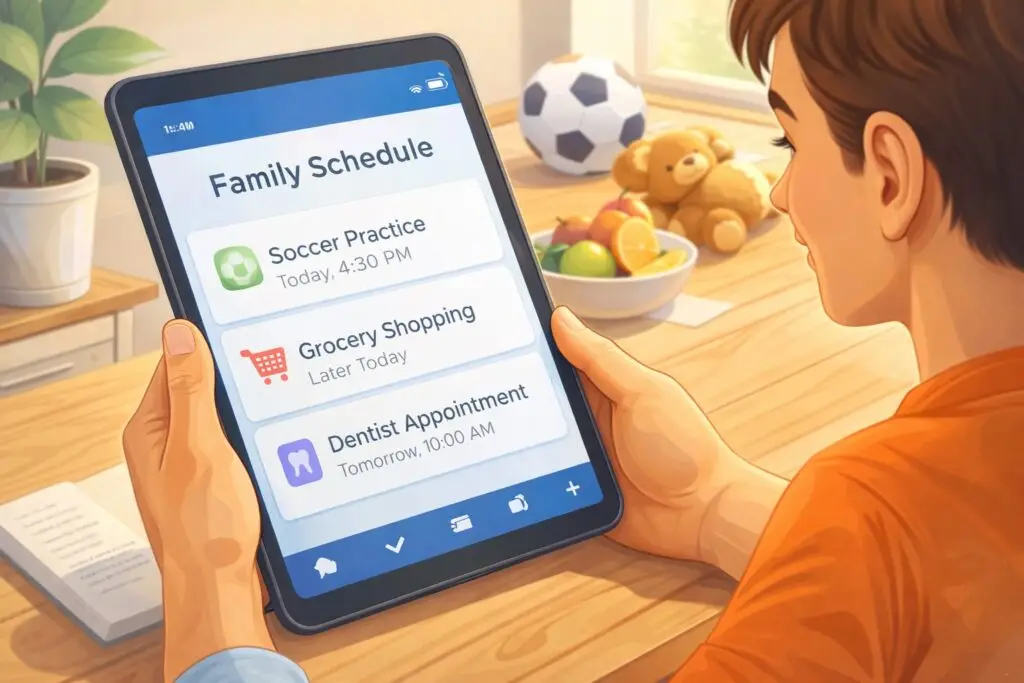
Smart shared calendars that sync automatically
AI family calendars can:
- Pull events from school portals, work calendars, and personal schedules
- Sync across devices and platforms
- Update everyone when changes occur
This reduces the need to manually re-enter information or send constant reminders.
Conflict detection and schedule balancing
Some AI scheduling tools can:
- Flag overlapping commitments
- Suggest alternative times
- Highlight days that are becoming overloaded
This helps families make proactive decisions instead of reacting to chaos.
School, work, and activity coordination in one place
Rather than juggling separate systems, AI allows families to view:
- School events
- Work obligations
- Sports and extracurriculars
- Family commitments
All in one shared view.
Using AI Tools to Manage Family Tasks and Daily Schedules
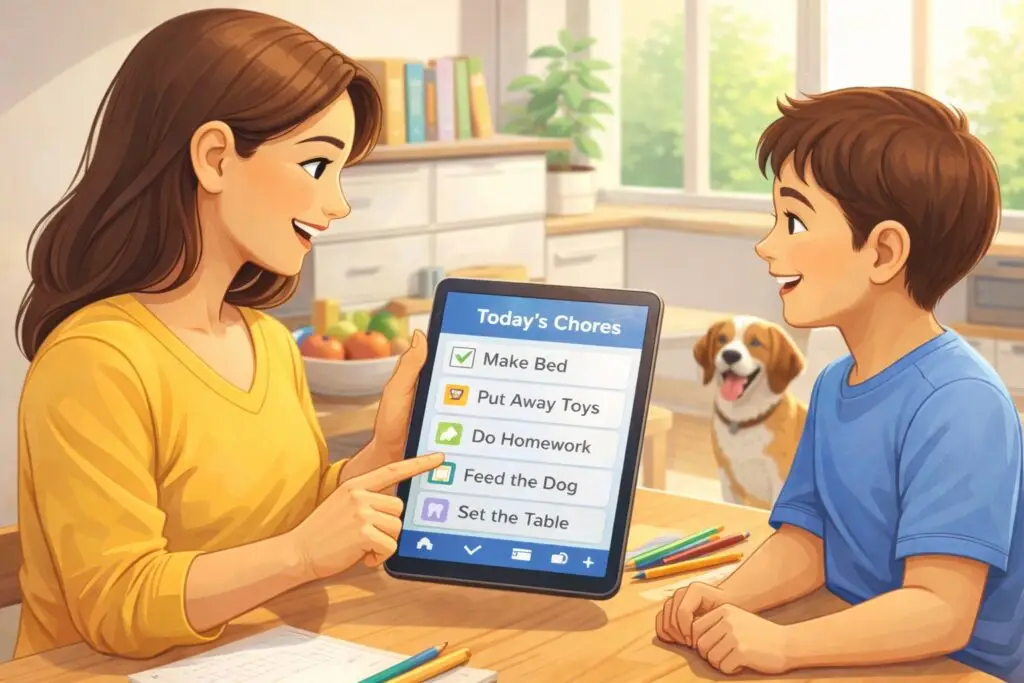
Assigning and tracking chores automatically
AI-powered task tools help families:
- Assign chores by person or age
- Set recurring schedules
- Track completion without nagging
Some systems even adapt reminders based on behavior patterns.
Shared task lists with reminders and follow-ups
Instead of verbal reminders or sticky notes, AI tools provide:
- Clear task ownership
- Automatic nudges when tasks aren’t completed
- Visibility for everyone involved
This reduces friction and improves accountability.
Age-appropriate task visibility for kids and teens
Many family tools allow:
- Simple task views for younger kids
- Responsibility tracking for teens
- Parental oversight without micromanaging
This helps children learn routines while maintaining structure.
AI for Family Notes, Plans, and Communication
Central family hubs for notes and important info
AI-powered family hubs act as a shared brain for:
- Important contacts
- School instructions
- Meal plans
- Travel details
Instead of searching through texts or emails, information stays accessible in one place.
AI-generated reminders and summaries
AI can automatically:
- Summarize weekly schedules
- Highlight upcoming priorities
- Send daily or weekly briefings
This keeps everyone aligned without constant check-ins.
Keeping everyone informed without constant reminders
When systems communicate for you, parents spend less time repeating information—and more time focusing on family life.
Daily Family Coordination: Morning, After-School, and Evening Planning

Morning routines and departure reminders
AI tools can support mornings by:
- Triggering reminders based on time or location
- Highlighting the day’s priorities
- Ensuring nothing important is forgotten
This reduces rushed mornings and unnecessary stress.
After-school activities, pickups, and homework tracking
AI helps manage:
- Pickup schedules
- Activity locations and times
- Homework and assignment reminders
Everyone knows the plan—even when schedules change.
Evening planning and next-day preparation

End-of-day summaries allow families to:
- Review what’s coming tomorrow
- Adjust plans in advance
- Prepare clothing, meals, or supplies
This creates smoother transitions between days.
Real-Life Examples of AI Family Coordination
A working parent managing school and work schedules
A parent with a hybrid job uses AI scheduling to:
- Sync work meetings with school drop-offs
- Receive alerts when conflicts arise
- Share visibility with a partner
The result is fewer surprises and better balance.
A multi-child household balancing activities
Families with multiple kids use AI to:
- Track activities across different locations
- Coordinate pickups and drop-offs
- Avoid double-booking evenings
This reduces logistical stress significantly.
Co-parenting and shared custody coordination
AI tools help co-parents:
- Share calendars transparently
- Coordinate school and activity schedules
- Reduce miscommunication
This supports smoother transitions for children.
AI for Family Scheduling: Shared Calendars and Daily Coordination
Family calendar and scheduling apps
These AI-powered family scheduling tools reduce conflicts by keeping calendars synced automatically
These tools focus on:
- Shared calendars
- Smart reminders
- Conflict detection
They’re ideal for families with busy, changing schedules.
Household task and routine tools
Task-based AI tools help manage:
- Chores
- Routines
- Recurring responsibilities
They work well for building consistency.
All-in-one family organization platforms
Some platforms combine:
- Calendars
- Tasks
- Notes
- Communication
These are best for families wanting a single central system. Many families use AI for family scheduling to connect tasks directly to shared calendars and routines
(These tools are explored in greater detail within the Pillar: AI for Parenting & Family Life.)
How AI for Family Scheduling Help Families Stay Organized
Start with one shared system
Avoid overwhelming your family. Choose one tool that solves a clear problem—such as missed events or forgotten tasks. AI for family scheduling works best when everyone shares visibility into the same system.
Keep tools simple and visible
The best systems are:
- Easy to access
- Visually clear
- Used consistently
Complex setups often fail.
Adjust as your family’s needs change
AI tools should evolve as:
- Kids grow older
- Schedules shift
- Responsibilities change
Flexibility is key.
Privacy, Safety, and Boundaries for Family AI Tools
Protecting family data and personal information
Choose tools that:
- Offer strong privacy controls
- Limit data sharing
- Allow parental oversight
Avoid platforms that collect unnecessary information.
Setting limits on notifications and automation
Too many alerts can be counterproductive. AI should reduce noise—not create it.
Teaching kids healthy tech habits
Use AI as a teaching opportunity:
- Show how tools support routines
- Encourage responsibility
- Maintain balance with offline life
FAQ: AI for Family Scheduling
Is AI safe to use for family planning?
Yes—when you choose reputable tools and configure privacy settings properly.
Can AI replace a traditional family calendar?
For many families, yes. AI-enhanced calendars offer more flexibility and coordination than static planners.
What if family members don’t use the same devices?
Most AI scheduling tools sync across platforms, allowing access from phones, tablets, and computers.
Final Thoughts
Why coordinated families feel less stressed
Clear systems reduce uncertainty. When everyone knows the plan, family life feels calmer and more manageable.
Small systems that make a big difference
You don’t need complex automation—just thoughtful tools that support your routines.
Using AI to support family life—not control it
AI works best as a quiet helper in the background, allowing families to focus on what matters most: time together. When used intentionally, AI for family scheduling becomes a quiet background system that supports calmer, more coordinated family life.
This topic fits into a broader look at how AI for everyday life supports daily routines across home, work, and family life.