

Planning a trip should feel exciting—but for many people, it quickly becomes overwhelming. Choosing destinations, comparing options, organizing details, and staying within budget can make travel planning time-consuming. This is where AI for travel planning can make a real difference.
Instead of juggling dozens of tabs, notes, and apps, AI helps bring structure to the planning process. It can suggest destinations based on your preferences, build flexible itineraries, generate packing lists, and help you plan realistic budgets—all without replacing your personal judgment or travel style.
In this guide, you’ll learn how AI fits naturally into everyday travel planning. We’ll walk through what AI travel planning really means, why it works so well for trips, and how you can start using it to plan better, calmer, and more organized travel experiences.
What AI for Travel Planning Really Means
AI for travel planning doesn’t mean handing over every decision to a computer. Instead, it serves as an intelligent assistant that helps you evaluate options, organize information, and reduce decision fatigue.
AI tools analyze patterns, preferences, and constraints—such as budget, timing, and travel style—to provide helpful suggestions. You remain in control, but with far less manual effort.
How AI helps with travel planning without replacing human decisions
AI is best at handling complexity, not personal meaning. It can compare routes, evaluate tradeoffs, and summarize options quickly, but it can’t decide what matters most to you. That’s why the most effective travel planning combines AI support with human judgment.
For example, AI can suggest multiple itinerary options for a city, but you decide whether a relaxed pace or a packed schedule fits your trip. AI helps narrow choices, not make them for you.
AI travel planning tools vs traditional travel apps
Traditional travel apps rely on filters and static inputs. You search, sort, and refine repeatedly. AI-powered travel planning tools work differently. They adapt to context and intent.
Instead of selecting dozens of checkboxes, you can describe what you want—such as a budget-friendly family trip with minimal driving—and AI responds with tailored suggestions. Over time, these tools can also learn from your preferences, making future planning even easier.
Why artificial intelligence works so well for trip planning
Travel planning involves many moving parts: timing, location, cost, logistics, and personal preferences. AI excels in situations where multiple variables must be considered together.
Because AI can process large amounts of information quickly, it reduces the mental load that makes planning stressful. The result isn’t a “perfect” trip—it’s a more transparent, more manageable planning process.
Why Travel Planning Is So Overwhelming Without AI
Most travel stress doesn’t come from the trip itself—it comes from the planning. Without support, people often spend hours researching, comparing, and second-guessing decisions.
Too many choices when planning trips
From destinations and lodging to transportation and activities, travel planning involves many decisions. The sheer number of options can lead to analysis paralysis, where choosing anything feels difficult.
AI helps by narrowing the field. Instead of endless browsing, you get curated options that align with your preferences, budget, and schedule.
Time-consuming research for itineraries and activities
Planning a trip often means reading reviews, checking maps, comparing prices, and cross-referencing schedules. This research adds up quickly.
AI speeds up this process by summarizing information, identifying patterns, and presenting clear recommendations. What once took hours can often be done in minutes.
Why packing, budgeting, and logistics create stress
Beyond destinations and activities, travel planning also includes packing lists, cost estimates, and logistics such as reservations and confirmations. These details are easy to overlook but hard to fix later.
AI helps bring these elements together in one place—creating checklists, budget snapshots, and reminders that reduce last-minute stress and forgotten details.
Using AI to Choose Travel Destinations and Timing

One of the most complex parts of travel planning is deciding where to go and when to go. Many people start with only a vague idea—“somewhere warm,” “not too expensive,” or “good for kids”—and get stuck scrolling through endless options. This is one area where AI for travel planning is especially helpful.
Instead of starting from scratch, AI helps turn loose preferences into concrete travel ideas that fit your budget, schedule, and travel style.
How AI suggests destinations based on your preferences
AI tools can evaluate multiple factors simultaneously, including budget range, preferred climate, travel distance, activity level, and past travel habits. When you describe what you’re looking for, AI responds with destinations that match those criteria rather than generic “top travel spots.”
For example, instead of browsing dozens of articles, you can ask for destinations that are:
- Budget-friendly during a specific month
- Suitable for families, couples, or solo travelers
- Aligned with interests like outdoor activities, food, or culture
By narrowing the field early, AI makes destination decisions feel manageable instead of overwhelming.
Finding the best time to travel using AI insights
Timing can have a huge impact on cost, crowds, and overall enjoyment. AI helps analyze seasonal trends, travel demand, and common pricing patterns to suggest better travel windows.
AI can help you:
- Identify off-peak or shoulder-season travel dates
- Avoid significant crowd surges and price spikes
- Balance weather conditions with affordability
Rather than guessing or relying on outdated advice, AI offers data-informed suggestions that help you choose travel dates with more confidence.
Turning vague travel ideas into clear plans with AI
Many trips begin with a rough idea rather than a firm plan. AI helps bridge the gap between inspiration and action by asking the right follow-up questions and organizing your thoughts.
For instance, if you know how much time you have and your general budget, AI can suggest:
- A short list of realistic destination options
- Sample trip lengths and travel routes
- Initial activity ideas to help you visualize the trip
This early clarity makes the rest of the planning process smoother, setting you up for easier itinerary building, packing, and budgeting in later steps.
AI Itinerary Planning for Stress-Free Trips

Once you’ve chosen where and when to travel, the next challenge is figuring out what to do each day. Many travelers either over-plan and feel rushed or under-plan and worry about missing out. This is where AI itinerary planning becomes especially useful.
AI helps create balanced, realistic itineraries that account for travel time, energy levels, and priorities—so your trip feels organized without being rigid.
Creating day-by-day travel itineraries with AI
AI can generate structured daily plans that include activities, meals, and downtime, tailored to your interests and trip length. Instead of starting with a blank page, you get a clear outline to refine.
These itineraries often account for:
- Logical grouping of activities by location
- Travel time between stops
- A mix of must-see highlights and flexible options
This approach reduces the guesswork while still leaving room for spontaneity.
Adjusting AI itineraries for families, couples, or solo travel
Different travelers need different pacing. A family trip may require slower mornings and built-in breaks, while a solo traveler may prefer a more flexible schedule.
AI makes it easy to adjust itineraries by travel style. You can ask for:
- Kid-friendly daily plans with downtime
- Romantic or relaxed couple-focused schedules
- Efficient solo itineraries with optional add-ons
Instead of rebuilding plans from scratch, AI adapts them to fit your needs.
Keeping itineraries flexible with AI travel planning tools
One of the biggest advantages of AI for travel planning is flexibility. If the weather changes, reservations shift, or energy runs low, AI can help you quickly rework the plan.
AI itinerary tools can:
- Suggest alternatives when plans change
- Reorder activities to reduce stress
- Offer nearby options that fit your updated schedule
This flexibility helps prevent small disruptions from turning into major frustrations, allowing you to enjoy the trip as it unfolds.
AI Packing Lists and Travel Preparation

Packing is one of the most stressful parts of travel planning. Forgetting something important—or bringing too much—can affect the entire trip. AI simplifies this step by creating personalized packing lists tailored to your destination, length of stay, and planned activities.
Instead of relying on generic checklists, AI adapts packing recommendations to your specific trip.
Personalized packing lists based on destination and activities
AI-generated packing lists consider factors like climate, trip length, accommodations, and planned activities. A weekend city trip, a beach vacation, and a hiking-focused getaway all require very different preparation—and AI accounts for those differences automatically.
AI packing lists can adjust for:
- Weather conditions and seasonal changes
- Activity-specific gear (walking tours, swimming, formal events)
- Airline or transportation constraints
This reduces the risk of forgetting essentials while avoiding unnecessary items.
Using AI for family and group travel packing
Group travel introduces new challenges: shared items, kids’ needs, and avoiding duplicate packing. AI helps coordinate packing responsibilities so everyone knows what to bring.
For family or group trips, AI can:
- Separate shared items from personal items
- Create individual packing lists for each traveler
- Flag commonly forgotten essentials for kids or groups
This coordination makes packing feel organized instead of chaotic.
Last-minute packing reminders powered by AI
Even with a solid list, last-minute details are easy to overlook. AI can provide reminders and final checks as departure approaches.
These reminders might include:
- Charging devices and downloading travel documents
- Packing medications, chargers, or travel adapters
- Confirming weather changes that affect clothing choices
By handling these details in advance, AI helps you start your trip feeling prepared rather than rushed.
Travel Budgeting Made Easier With AI
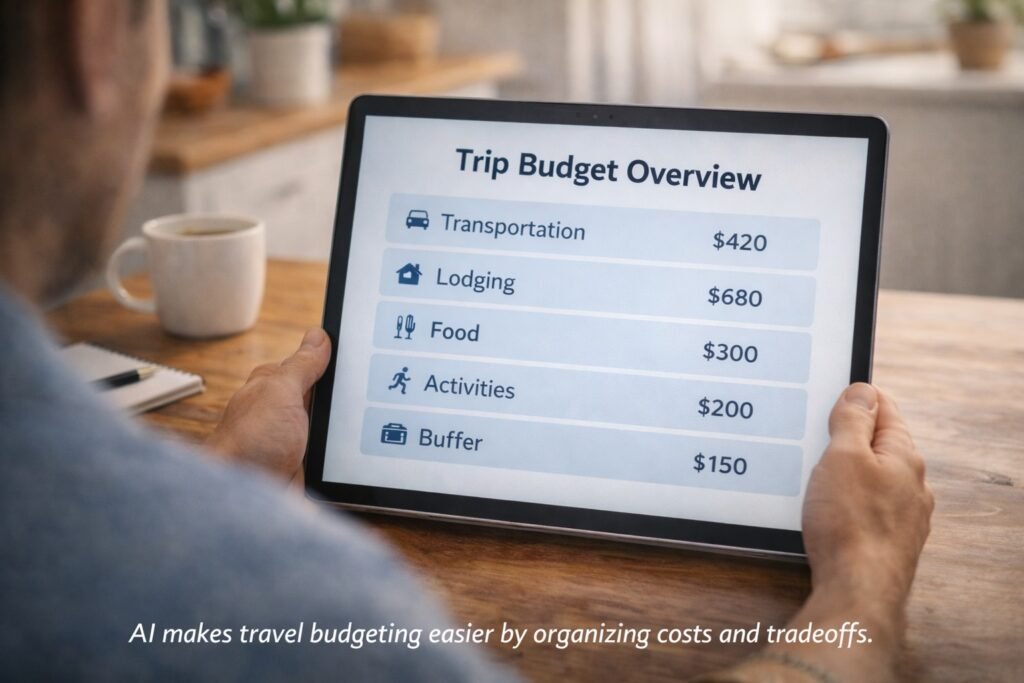
Budget concerns are one of the biggest sources of travel stress. Many travelers underestimate costs, forget certain expenses, or struggle to balance comfort with affordability. AI helps bring clarity to travel budgeting by organizing costs, highlighting tradeoffs, and adjusting plans as needed.
Rather than guessing or constantly recalculating, AI helps you make informed decisions before and during your trip.
Creating realistic travel budgets using AI
AI can help you build a travel budget that reflects your destination, trip length, and travel style. Instead of relying on rough estimates, AI pulls together typical costs for transportation, lodging, food, and activities.
AI-generated budgets often include:
- Clear cost categories so nothing is overlooked
- Flexible ranges instead of rigid numbers
- Built-in buffers for unexpected expenses
This makes it easier to plan a trip that fits your financial comfort level.
Comparing travel costs without spreadsheets
Comparing travel options can quickly turn into spreadsheet overload. AI simplifies this process by summarizing tradeoffs instead of forcing you to analyze every number manually.
For example, AI can help compare:
- A shorter trip with higher daily costs vs a longer trip with lower daily costs
- Central accommodations vs cheaper lodging farther away
- Convenience-focused options vs budget-focused alternatives
By presenting pros and cons clearly, AI helps you choose what matters most to you.
Tracking and adjusting spending during your trip
Travel budgets often change once the trip begins. AI helps you stay aware of spending without constant monitoring.
AI tools can:
- Provide daily or weekly spending snapshots
- Flag when spending is trending higher than planned
- Suggest adjustments to balance costs later in the trip
This ongoing visibility helps you enjoy your travel experience without worrying about financial surprises afterward.
AI Travel Recommendations During Your Trip

Once your trip is underway, decisions don’t stop. Choosing where to eat, what to do next, or how to adjust plans can quickly become overwhelming—especially in unfamiliar places. AI for travel planning remains useful throughout the trip, offering real-time recommendations that align with your preferences and schedule.
Instead of relying on generic “top attractions” lists, AI helps you make choices that feel more personal and less rushed.
Personalized restaurant and activity recommendations
AI recommendations improve as they factor in your interests, dietary needs, energy level, and location. Rather than suggesting the same places everyone visits, AI can surface options that match your travel preferences.
For example, AI can recommend:
- Restaurants that fit your dietary preferences or budget
- Activities near your current location to reduce travel time
- Experiences that align with your pace, such as relaxed sightseeing or active exploration
This personalization helps you enjoy experiences that feel intentional rather than accidental.
Using AI as a real-time travel assistant
One of the most significant advantages of AI is its ability to respond in the moment. When plans change or free time opens up, AI can help you decide what to do next without restarting your planning process.
AI can assist with:
- Finding nearby attractions or restaurants on short notice
- Adjusting plans based on weather or timing changes
- Answering quick questions about transportation or logistics
This real-time support keeps your trip moving smoothly, even when things don’t go exactly as planned.
Avoiding tourist traps with smarter AI suggestions
Many travelers worry about wasting time or money on overcrowded or overpriced attractions. AI helps filter out low-value options by comparing reviews, trends, and local patterns.
AI recommendations can highlight:
- Less crowded alternatives to popular attractions
- Local favorites that align with your interests
- Better-value options that still deliver a great experience
By guiding you toward higher-quality choices, AI helps you spend more time enjoying your trip and less time feeling disappointed.
Organizing Travel Details With AI
As trips get closer, important details start piling up—flight confirmations, hotel reservations, activity tickets, rental car information, and reminders. Keeping everything organized can feel just as stressful as planning the trip itself. AI helps by bringing travel details into a single, easy-to-manage system.
Instead of searching through emails or multiple apps, AI helps you stay organized before and during your trip.
Keeping reservations, tickets, and confirmations organized
AI tools can summarize and centralize travel information, making it easier to access what you need when you need it. Rather than manually tracking every detail, AI can organize confirmations into clear, structured overviews.
This can include:
- Flight and transportation details
- Lodging check-in and check-out information
- Activity reservations and timing
Having everything in one place reduces last-minute scrambling and missed details.
Travel checklists and reminders powered by AI
Travel involves many small tasks that are easy to forget—checking in, confirming reservations, or preparing documents. AI-generated reminders help ensure nothing slips through the cracks.
AI can help by:
- Creating pre-trip and day-of-travel checklists
- Sending reminders based on travel timelines
- Adjusting reminders if plans change
These gentle prompts reduce mental load and help you feel prepared without constant monitoring.
Sharing AI-generated travel plans with others
When traveling with others, clear communication is essential. AI makes it easier to share itineraries, packing responsibilities, and important details with travel companions.
AI-generated plans can be:
- Easily shared in a readable format
- Updated in real time if plans change
- Tailored for different travelers in the group
This shared visibility helps everyone stay aligned, reducing confusion and unnecessary stress.
Best AI Tools for Travel Planning
You don’t need dozens of apps to benefit from AI for travel planning. In most cases, a small set of well-chosen tools can handle everything from early trip ideas to organization during travel. The key is understanding what each type of tool does best.
Rather than replacing traditional travel apps, AI tools often work alongside them—adding flexibility, personalization, and clarity.
General AI assistants for trip planning and research
General AI assistants are often the most versatile tools for travel planning. They help with brainstorming destinations, building itineraries, creating packing lists, and thinking through budgets.
These tools are especially useful for:
- Turning rough ideas into structured plans
- Comparing options without endless searching
- Adjusting plans quickly when details change
Because they rely on conversation rather than forms or filters, they feel more natural for early-stage planning and problem-solving.
AI-powered travel apps and platforms
Some travel apps now include AI features that enhance booking, recommendations, or itinerary management. These tools often combine traditional travel data with AI-driven suggestions.
AI-enhanced travel apps can help with:
- Route and lodging comparisons
- Activity and restaurant discovery
- Real-time updates during trips
They’re especially helpful once you’ve moved from planning into execution.
Using AI with calendars, notes, and planning tools
AI becomes even more powerful when integrated with tools you already use, such as calendars, note-taking apps, or task managers. This helps keep travel planning from becoming a separate, disconnected system.
With AI support, these tools can:
- Turn itineraries into calendar events
- Create travel checklists and reminders
- Keep all travel-related notes in one place
This integration makes travel planning feel like part of everyday life rather than an extra project.
How to Start Using AI for Travel Planning
Getting started with AI for travel planning doesn’t require new habits or technical skills. The most effective approach is to use AI as a support tool—layered into the way you already plan trips.
Starting small helps you build confidence while still seeing real benefits.
Choosing one trip to plan with AI
Rather than rethinking how you plan every trip, start with a single upcoming journey. This keeps the process manageable and lets you experiment without pressure.
A good first trip to plan with AI is:
- A weekend getaway
- A family visit or short vacation
- Any trip with flexible plans
Using AI for just one trip makes it easier to see where it helps most.
Simple AI travel prompts for beginners
AI works best when given clear context. You don’t need perfect prompts—just describe what you’re trying to plan and any constraints that matter.
Beginner-friendly prompts might include:
- Asking for a simple itinerary outline
- Requesting a packing list based on destination and season
- Getting help estimating a travel budget
These small requests quickly show how AI reduces planning effort.
Building confidence with AI-assisted trip planning
As you get more comfortable, you can use AI in more parts of the process—adjusting plans, refining itineraries, or organizing details.
Confidence grows when you:
- Review AI suggestions instead of accepting them blindly
- Use AI for structure, not perfection
- Combine AI guidance with your personal preferences
Over time, AI becomes a natural part of planning rather than something you have to “figure out.”
Real-Life Examples of AI Travel Planning
Seeing how AI fits into real trips makes it easier to understand its value. Travel planning looks different depending on who you are, how you travel, and what you prioritize. These examples show how AI adapts to different travel styles without overcomplicating the process.
A family planning a school-break vacation
For families, travel planning often means coordinating schedules, budgets, and kid-friendly activities. AI helps by organizing these moving parts in one place.
In this scenario, AI can:
- Suggest destinations that fit school break timing and family budgets
- Build slower-paced itineraries with built-in rest time
- Create shared packing lists that account for kids’ needs
This structure helps families focus on time together instead of logistics.
A couple organizing a weekend getaway
Short trips still require planning, but time is limited. AI helps couples maximize experiences without spending hours researching.
AI can assist by:
- Suggesting destinations within a reasonable travel distance
- Creating relaxed itineraries with optional activities
- Recommending dining and experiences aligned with shared interests
The result is a trip that feels thoughtful without feeling overplanned.
A solo traveler managing a multi-city trip
Solo travelers often value flexibility and efficiency. AI supports this by keeping plans adaptable while maintaining structure.
For a multi-city trip, AI can:
- Optimize travel routes between destinations
- Adjust itineraries as plans evolve
- Keep travel details organized in one place
This allows solo travelers to stay spontaneous without losing track of logistics.
A frequent traveler optimizing time and costs
Frequent travelers benefit from AI’s ability to recognize patterns and reduce repetitive planning.
AI helps frequent travelers by:
- Reusing successful itineraries or packing lists
- Identifying cost-saving opportunities
- Streamlining travel organization across trips
Over time, AI becomes a planning shortcut rather than a novelty.
Common Mistakes to Avoid When Using AI for Travel
AI can make travel planning easier, but like any tool, it works best when used thoughtfully. Most issues come not from AI itself, but from unrealistic expectations or over-reliance. Understanding these common mistakes helps you get better results and enjoy the planning process.
Overplanning every detail with AI
One of the most common mistakes is using AI to plan every minute of a trip. While structure is helpful, overly detailed schedules can make travel feel rushed or stressful.
AI works best when it provides:
- A clear framework rather than a rigid plan
- Optional activities instead of fixed schedules
- Room for spontaneity and rest
Using AI as a guide—not a rulebook—leads to more enjoyable trips.
Trusting AI suggestions without verification
AI is excellent at organizing information, but it’s not perfect. Details like hours of operation, reservation requirements, or local conditions can change.
Before finalizing plans, it’s important to:
- Verify key details through official sources
- Double-check reservations and travel logistics
- Use AI recommendations as a starting point, not a final authority
This balance keeps planning efficient while avoiding preventable issues.
Ignoring personal preferences and travel style
AI suggestions are only as good as the context you provide. When travelers accept recommendations that don’t match their interests, trips can feel misaligned.
To avoid this:
- Clearly communicate priorities to AI
- Adjust suggestions to fit your energy level and goals
- Treat AI outputs as customizable drafts
Personal judgment ensures the trip reflects what matters most to you.
AI for Travel Planning FAQs
Can AI really plan an entire trip?
AI can help plan most aspects of a trip, including destinations, itineraries, packing lists, and budgets. However, it works best as a planning assistant rather than a fully autonomous planner.
AI excels at organizing information and suggesting options, but final decisions—such as bookings and personal priorities—are still best handled by you. The most effective travel planning combines AI guidance with human judgment.
Is AI travel planning safe and private?
Most reputable AI tools are designed with user privacy in mind, but it’s still important to be cautious about what information you share. Avoid entering sensitive personal or financial details unless you trust the platform and understand its privacy policies.
For general planning tasks like itineraries, packing lists, and budgeting estimates, AI travel planning is typically safe when used responsibly.
Does AI replace travel agents or booking sites?
AI does not replace travel agents or booking platforms—it complements them. AI helps you plan and organize, while booking sites and agents handle reservations, pricing, and transactions.
Many travelers use AI to prepare smarter before booking, which helps them make better decisions once they’re ready to reserve flights, lodging, or activities.
What does it cost to use AI for travel planning?
Many AI tools offer free or low-cost options that are more than sufficient for travel planning. Advanced features or premium plans may provide additional capabilities, but they’re not required to see benefits.
For most travelers, AI travel planning is an affordable way to reduce stress and save time without adding significant expense.
Final Thoughts: Why AI Makes Travel Planning Less Stressful
Travel planning doesn’t have to feel overwhelming. With the right approach, AI for travel planning can turn a stressful process into something calmer, more organized, and even enjoyable. By helping you think through options, organize details, and reduce decision fatigue, AI supports better trips without taking control away from you.
Why AI makes trip planning simpler and calmer
AI shines in areas where travel planning often breaks down—too many choices, too much information, and not enough time. By summarizing options, creating structure, and offering gentle guidance, AI helps you move forward with confidence instead of second-guessing every decision.
Rather than replacing human judgment, AI supports it. You stay in control of your travel experience while benefiting from smarter planning tools.
How AI helps you focus on travel experiences
When planning feels manageable, it’s easier to focus on what actually matters: enjoying the trip. AI helps handle logistics, organization, and preparation so your attention stays on experiences, connections, and memories.
From packing lists to itineraries to real-time recommendations, AI reduces mental load both before and during your trip.
Getting started with AI on your next trip
You don’t need to overhaul your planning process to get value from AI. Start small—use it for one part of one trip, and build from there. Over time, AI becomes a natural extension of how you plan travel, helping you feel prepared without feeling overwhelmed.
With thoughtful use, AI becomes less about technology and more about peace of mind—making travel planning easier, clearer, and far less stressful.
This topic fits into a broader look at how AI for everyday life supports daily routines across home, work, and family life.