

Artificial intelligence is already part of your everyday life — even if you’ve never opened an app labeled “AI.”
From suggested replies on your phone to traffic predictions, shopping recommendations, and automatic reminders, AI quietly works behind the scenes to make daily life easier. Most people interact with AI dozens of times a day without thinking about it, because modern AI is designed to feel natural, helpful, and invisible.
AI for everyday life isn’t about robots or futuristic technology. It’s about small, practical tools that save time, reduce mental load, and help you stay organized. When used well, AI supports your routines instead of complicating them.
This guide explains what everyday AI really is, how it already shows up in your daily routine, and how you can start using it in simple, safe, and realistic ways.
What AI for Everyday Life Really Means
When people hear the word “AI,” they often imagine advanced technology, complex systems, or something meant only for experts. In reality, everyday AI is much simpler — and far more common.
A simple definition of AI for everyday life
Everyday AI refers to artificial intelligence that helps with routine tasks, decisions, and organization.
It works quietly in the background to make daily activities faster, easier, or more predictable.
Instead of replacing human judgment, everyday AI supports it. The goal isn’t automation for its own sake — it’s to reduce friction in everyday life.
Examples of everyday AI include:
- Calendar reminders that adjust automatically
- Apps that suggest the best time to leave for an appointment
- Shopping tools that track prices or recommend alternatives
- Streaming platforms that learn what you enjoy
None of these feel complicated. That’s exactly the point.
The difference between “AI tools” and AI-powered features
One reason many people think they don’t use AI is that they expect it to be obvious.
However, most everyday AI isn’t a standalone tool. Instead, it’s a feature inside apps you already use.
For example:
- Your email app suggests replies
- Your phone groups photos automatically
- Navigation apps adjust routes based on traffic
- Shopping apps recommend items based on past purchases
These features don’t require setup, training, or technical knowledge. They simply work — which is why many people overlook them.
Why most people already use AI without realizing it
Modern AI is designed to blend into daily routines. Unlike early technology that demanded attention, today’s AI minimizes friction.
Because of this:
- You don’t need to “learn AI” to benefit from it
- You don’t need to change how you live
- You don’t need to trust it with major decisions right away
Instead, AI earns trust gradually by being helpful in small ways. Over time, these small improvements add up to less stress and better organization.
Why AI for Everyday Life Is Becoming Part of Daily Routines
Technology often feels overwhelming because it asks people to change too much at once. Everyday AI succeeds because it does the opposite.
How AI reduces mental load instead of adding complexity
Many daily decisions are repetitive:
- What needs to get done today?
- When should I leave?
- Did I forget something?
- Is there a cheaper or faster option?
AI helps by handling these background decisions for you. Instead of constantly remembering and checking, you receive gentle prompts, suggestions, or summaries.
This reduces mental load — the invisible effort of keeping everything in your head.
Small automations vs. full system overhauls
One common misconception is that using AI means redesigning your entire life. In reality, everyday AI works best in small layers.
For example:
- One smart reminder instead of a full productivity system
- One shared family calendar instead of multiple apps
- One budgeting insight, instead of manual tracking
These small automations feel manageable, which makes them easier to stick with.
Why AI works best when it stays in the background
The most effective everyday AI doesn’t demand attention. Instead, it:
- Runs quietly
- Learns patterns over time
- Offers help only when needed
When AI stays in the background, it feels less like technology and more like support. That’s why many people come to rely on it without ever labeling it as “AI.”
AI Morning Routines for Busy Adults
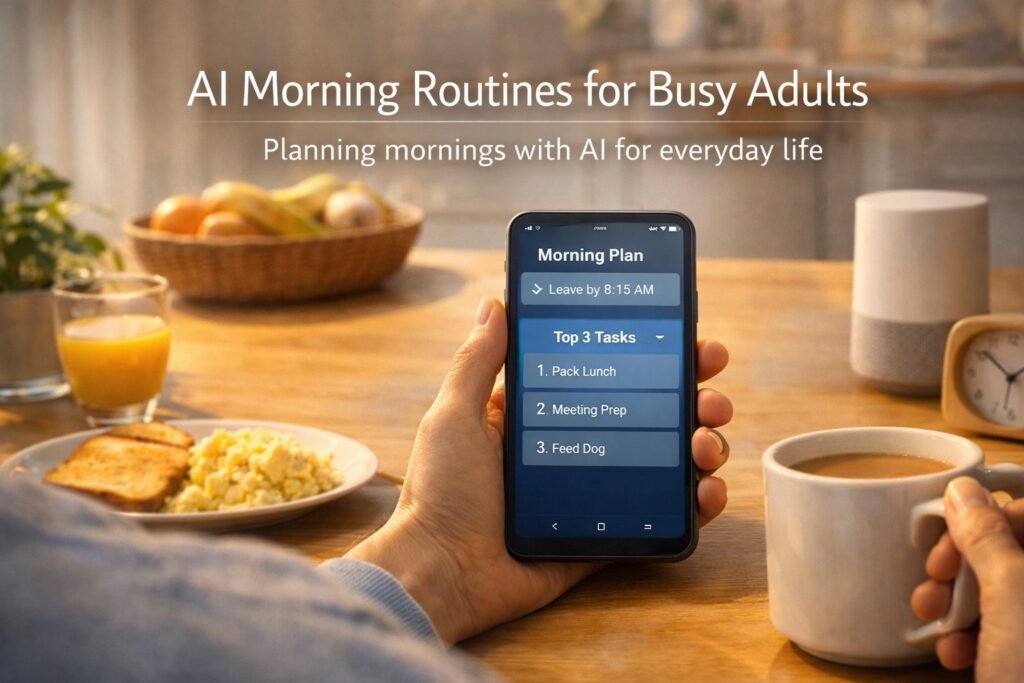
Mornings often set the tone for the entire day. When mornings feel rushed or disorganized, stress often follows. This is one area where AI for everyday life can make an immediate and noticeable difference.
Instead of reacting to the day as it unfolds, AI helps you start the day with clarity and intention.
Planning mornings with AI for everyday life instead of reacting
Many people begin their mornings by checking messages, emails, or calendars and immediately feeling behind. AI shifts this experience from reactive to proactive.
With AI support, mornings can start with:
- A short summary of the day ahead
- A prioritized list of tasks
- Reminders based on location, time, or habits
Rather than sorting through information yourself, AI organizes it for you. As a result, you spend less time deciding what to do and more time actually doing it.
AI for reminders, priorities, and daily planning
Everyday AI tools are especially effective at handling small but important details that are easy to forget in the morning.
Examples include:
- Reminders that adjust if your schedule changes
- Daily priorities based on deadlines and habits
- Notifications timed for when you’re most likely to act
Because these systems learn over time, they become more accurate the longer you use them. This makes planning feel lighter, not more rigid.
Creating a calm start to the day with AI support
The real benefit of AI in morning routines isn’t speed — it’s calm.
By reducing mental clutter early in the day, AI helps create a sense of control before responsibilities pile up. Instead of juggling multiple thoughts at once, you can focus on what matters most.
For busy adults, this often means:
- Fewer forgotten tasks
- Less rushing
- A smoother transition into work, family, or personal time
When mornings feel calmer, the rest of the day tends to follow.
AI for Everyday Life in Family Scheduling and Daily Coordination

Coordinating family life is one of the most challenging parts of daily living. Between work commitments, school schedules, activities, appointments, and personal responsibilities, it’s easy for details to slip through the cracks. This is where AI for everyday life becomes especially valuable.
Instead of relying on memory or constant check-ins, AI helps families stay aligned with less effort.
Shared calendars and automated reminders
AI-powered family calendars bring multiple schedules into one clear view. Rather than juggling separate calendars for each person, shared systems sync everything automatically.
With AI support:
- Events update in real time
- Reminders adjust when plans change
- Conflicts are flagged before they become problems
As a result, families spend less time coordinating logistics and more time focusing on being present.
Managing school, work, and activities in one place
Daily coordination often breaks down because information lives in too many places. School emails, work meetings, sports schedules, and personal tasks all compete for attention.
AI helps by:
- Centralizing schedules and reminders
- Highlighting upcoming deadlines or commitments
- Sending timely notifications based on context
Instead of checking multiple apps, families can rely on one system that keeps everyone informed.
Reducing schedule conflicts and missed tasks
Missed appointments and double bookings usually happen because people are overwhelmed, not careless. AI reduces these issues by anticipating needs rather than reacting to mistakes.
For example:
- Alerts when events overlap
- Gentle reminders before transitions
- Suggestions to reschedule when conflicts arise
By handling the background coordination, AI removes stress without adding complexity.
When family schedules feel manageable, daily life becomes more predictable and less chaotic. That sense of stability is one of the biggest benefits of using AI in everyday routines.
AI for Home Management and Household Tasks
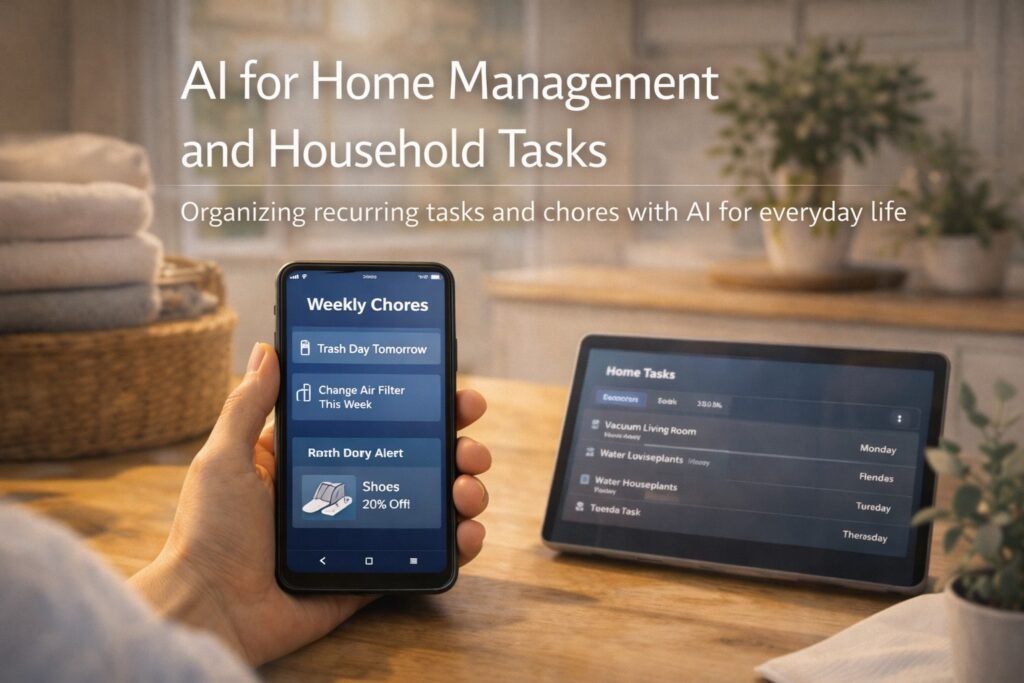
Managing a household involves dozens of recurring tasks, many of which are easy to forget but hard to ignore when they pile up. Cleaning schedules, deliveries, maintenance, and daily chores all require attention. AI for everyday life helps bring structure to these responsibilities without adding another layer of work.
Rather than reacting to messes or missed tasks, AI helps households stay one step ahead.
Using AI for everyday life to manage chores and recurring responsibilities
One of the biggest advantages of AI in home management is consistency. Instead of relying on memory or manual checklists, AI-powered systems keep routines running automatically.
Examples include:
- Chore reminders based on frequency or past behavior
- Task assignments that rotate between family members
- Notifications when something hasn’t been completed
Because these systems adapt over time, they become more accurate and less intrusive. This makes it easier to maintain routines without constant oversight.
Smart home tools that simplify daily routines
Many everyday household tools now include AI-powered features designed to reduce effort. These tools don’t require technical setup or constant monitoring — they simply work in the background.
Common examples include:
- Cleaning devices that adjust schedules automatically
- Smart assistants that manage reminders and lists
- Systems that anticipate restocking or maintenance needs
When these tools work together, they reduce the number of decisions you need to make each day.
Turning household chaos into predictable systems
Household stress often stems from uncertainty—uncertainty about what needs attention and when. AI replaces guesswork with gentle structure.
By creating predictable routines, AI helps:
- Reduce last-minute scrambling
- Prevent tasks from being forgotten
- Keep everyone aligned without constant reminders
The result isn’t a perfectly automated home, but a more organized one that feels easier to manage.
When household tasks feel manageable, daily life becomes lighter and more balanced. That’s the real value of AI in home management — support that stays out of the way while keeping things running smoothly.
Smart Shopping and Budgeting With AI in Everyday Life

Everyday spending decisions can add up quickly. From grocery runs to online purchases and monthly bills, it’s easy to overspend simply because tracking everything takes time. AI for everyday life helps simplify shopping and budgeting by providing insight without requiring constant attention.
Instead of manually monitoring every expense, AI quietly watches patterns and highlights opportunities to save.
AI-powered price tracking and deal alerts
One of the most practical uses of AI in daily life is price awareness. Many shopping tools now track prices automatically and alert you when something drops.
These tools can:
- Monitor items over time
- Notify you of better deals
- Suggest similar products at lower prices
By handling price tracking in the background, AI helps you make smarter purchases without extra effort.
Budgeting tools that learn spending habits
Traditional budgeting often fails because it requires consistent manual input. AI-powered budgeting tools work differently.
They analyze spending patterns to:
- Categorize expenses automatically
- Identify recurring subscriptions or hidden costs
- Provide summaries that are easy to understand
Over time, these tools become more accurate, making budgeting feel less restrictive and more informative.
Using AI to make everyday purchasing decisions easier
Beyond tracking numbers, AI helps reduce decision fatigue around spending.
For example:
- Highlighting when spending is higher than usual
- Suggesting adjustments before problems arise
- Offering insights instead of rigid rules
This approach supports better financial awareness without judgment or complexity.
When shopping and budgeting feel manageable, financial stress decreases. That’s why AI works best as a guide — offering timely insight while leaving final decisions in your hands.
AI for Entertainment and Personalized Recommendations

Choosing what to watch, listen to, or read should be relaxing — yet it often feels overwhelming. With endless options across streaming platforms, podcasts, and music apps, decision fatigue can set in quickly. AI for everyday life helps by narrowing choices and surfacing content that matches your preferences.
Instead of scrolling endlessly, AI helps you get to what you’ll actually enjoy.
How streaming and music platforms use AI
Entertainment platforms use AI to understand viewing and listening patterns. Rather than relying on general popularity, these systems analyze behavior over time.
They look at factors such as:
- What you watch or listen to
- When you stop or skip content
- How often you return to certain genres
Using this information, AI adjusts recommendations continuously, improving accuracy without requiring feedback.
Why recommendations feel surprisingly accurate
Over time, AI systems learn subtle preferences that are difficult to articulate manually. This is why recommendations often feel personal, even when you’ve never explicitly set preferences.
AI identifies patterns like:
- Preferred pacing or tone
- Favorite themes or topics
- Time-of-day viewing habits
Because these insights are built gradually, recommendations improve naturally instead of changing abruptly.
Reducing choice overload with smarter suggestions
The biggest benefit of AI in entertainment isn’t just better recommendations — it’s fewer decisions.
By presenting a smaller, more relevant set of options, AI:
- Saves time
- Reduces frustration
- Makes leisure time more enjoyable
When entertainment feels easy again, it actually serves its purpose: helping you relax.
By removing unnecessary choices, AI turns entertainment back into a simple pleasure rather than another task to manage.
AI for Everyday Life in Travel Planning and Everyday Trips
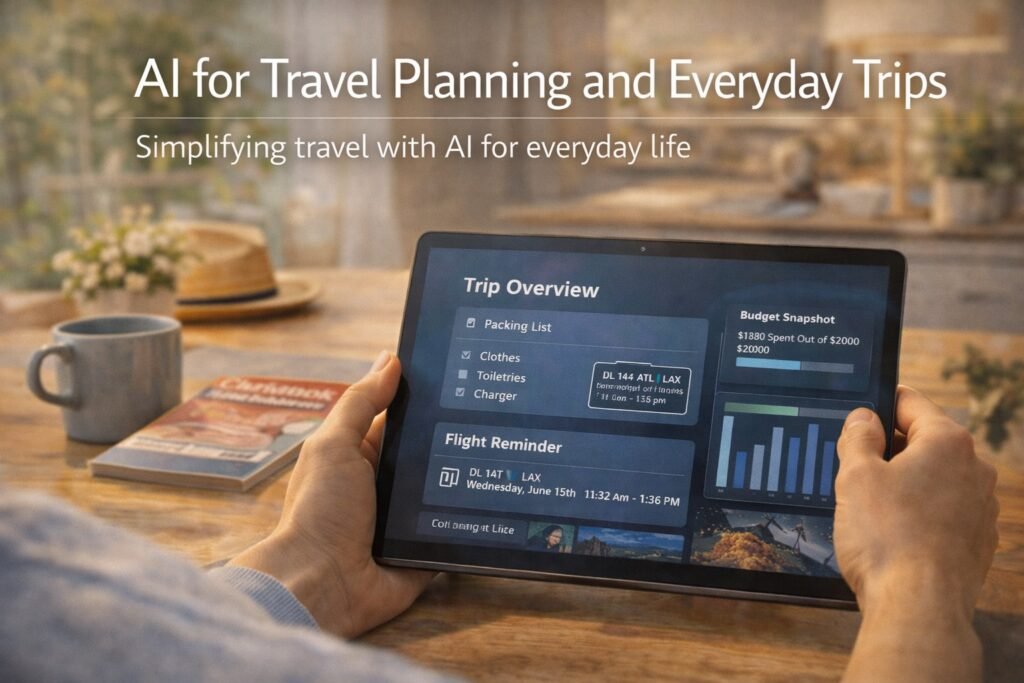
Travel planning often involves dozens of small decisions. From choosing destinations and booking accommodations to packing and budgeting, even short trips can feel overwhelming. AI for everyday life helps simplify this process by organizing details and anticipating needs.
Instead of juggling multiple tabs and lists, AI helps you plan trips with less stress and more confidence.
AI-generated itineraries and packing lists
One of the most practical travel uses of AI is organization. AI-powered tools can generate itineraries and packing lists based on trip length, destination, and personal preferences.
These tools help by:
- Suggesting realistic daily plans
- Creating packing lists tailored to weather and activities
- Adjusting recommendations if plans change
By handling the logistics, AI frees you to focus on the experience rather than the planning.
Budgeting and planning trips more efficiently
Travel costs can add up quickly, especially when expenses aren’t clearly tracked. AI helps manage travel budgets by monitoring spending patterns and highlighting opportunities to save.
Common features include:
- Budget forecasts based on trip details
- Alerts when prices change
- Recommendations for cost-effective alternatives
This makes it easier to plan trips that align with your financial goals.
Reducing travel stress with AI assistance
Travel stress often comes from uncertainty — delays, missed details, or last-minute changes. AI helps reduce this stress by offering timely information and reminders.
For example:
- Notifications about schedule changes
- Suggestions for earlier departures or alternative routes
- Reminders for check-ins, documents, or reservations
By supporting you throughout the trip, AI turns travel planning into a smoother, more predictable experience.
When travel feels organized, it becomes more enjoyable. AI doesn’t replace spontaneity — it simply removes unnecessary friction so you can focus on the journey.
Is AI for Everyday Life Safe for Family Use?

As AI becomes more common in daily routines, questions about safety and privacy are natural. Many people want to know whether AI tools are appropriate for families and how to use them responsibly. AI for everyday life should feel supportive, not risky or invasive.
When used thoughtfully, everyday AI can be both safe and beneficial.
Understanding privacy and data safety in AI for everyday life
Most everyday AI tools rely on data to function. This can include calendar information, preferences, or usage patterns. While this sounds concerning, responsible tools are designed with privacy in mind.
To stay safe:
- Review privacy settings and permissions
- Use strong passwords and device security
- Avoid sharing sensitive personal information unnecessarily
Being informed about how tools use data helps you stay in control.
How to choose trustworthy AI tools
Not all AI tools are created equally. Choosing reliable tools is one of the most important steps in safe everyday use.
When evaluating tools, look for:
- Clear explanations of how data is used
- Established companies or transparent developers
- Simple, understandable privacy policies
Trustworthy tools focus on usability and protection, not excessive data collection.
Teaching kids and families healthy AI habits
For families, AI also presents an opportunity to model healthy technology habits. Instead of treating AI as something mysterious, it helps to talk openly about how it works and why it’s being used.
Healthy habits include:
- Using AI as a helper, not a decision-maker
- Setting boundaries around screen time
- Encouraging critical thinking about recommendations
When families approach AI thoughtfully, it becomes a tool for support rather than a distraction.
Safety isn’t about avoiding AI altogether — it’s about using it intentionally. With the right habits and tools, AI can support family life without compromising trust or privacy.
How to Start Using AI in Everyday Life (Without Overdoing It)
Getting started with AI doesn’t require a major lifestyle change. In fact, AI for everyday life works best when it’s introduced gradually. The goal isn’t to automate everything — it’s to make daily routines feel lighter and more manageable.
By starting small, you can build confidence and avoid feeling overwhelmed.
Identify one daily friction point
The easiest way to begin is by identifying a single moment in your day that feels frustrating or repetitive.
Common friction points include:
- Forgetting small tasks
- Feeling rushed in the morning
- Managing family schedules
- Tracking spending or shopping decisions
Once you identify one challenge, you can look for an AI feature or tool designed specifically to support that area.
Start with one AI tool or feature
Instead of experimenting with multiple tools at once, focus on just one. This makes it easier to understand how the tool works and whether it fits into your routine.
For example:
- Use an AI reminder feature in your existing calendar
- Try a budgeting app with automatic categorization
- Enable smart suggestions in a shopping or travel app
Starting small helps AI feel helpful rather than intrusive.
Let AI support routines, not replace decisions
AI is most effective when it acts as an assistant, not a decision-maker. While it can provide insights and suggestions, the final choice should always remain yours.
This balance:
- Keeps you in control
- Prevents over-reliance on automation
- Builds trust over time
When AI supports routines instead of replacing judgment, it becomes a sustainable part of daily life.
The best everyday AI systems don’t demand attention — they quietly improve how things run. By introducing AI slowly and intentionally, you can create routines that feel more organized, calm, and flexible.
The Future of AI in Everyday Life
The future of AI isn’t about dramatic breakthroughs or fully automated lives. Instead, it’s about AI becoming more personal, more subtle, and more supportive. As everyday AI continues to evolve, its role in daily life will feel less like technology and more like quiet assistance.
Rather than replacing routines, AI will continue to refine them.
How AI will become more personalized
As AI systems learn from patterns over time, they will become better at understanding individual needs. This doesn’t mean collecting more information — it means using existing data more intelligently.
Future everyday AI will:
- Adapt to personal schedules and habits
- Offer suggestions at the right time, not constantly
- Adjust recommendations based on real-life changes
This personalization will make AI feel more intuitive and less intrusive.
What everyday AI will look like in the next few years
In the near future, AI will continue blending into tools people already use. Instead of new platforms, existing apps and systems will become smarter.
You can expect:
- Better summaries and reminders
- More accurate predictions and suggestions
- Improved coordination across devices and apps
These improvements will focus on clarity and ease, not complexity.
Why calm, ethical AI matters more than powerful AI
As AI becomes more capable, ethical use becomes more important. Powerful tools are only helpful if they respect privacy, transparency, and user control.
Calm, ethical AI:
- Prioritizes user wellbeing
- Explains what it does and why
- Supports decisions without pressuring users
This approach ensures that AI remains a helpful presence rather than a source of stress.
The future of AI in everyday life isn’t about doing more — it’s about doing what already matters with less effort. When designed thoughtfully, AI helps people feel more organized, confident, and supported in their daily routines.
Final Thoughts: Making AI Work for Your Daily Life
AI doesn’t need to be complicated to be useful. In everyday life, its greatest value comes from small improvements that add up over time. When used thoughtfully, AI for everyday life helps reduce stress, bring structure to routines, and make daily decisions feel lighter.
Rather than changing how you live, AI works best when it supports what you’re already doing.
Why everyday AI is about support, not automation
The most effective AI tools don’t take control — they offer help. By handling reminders, summaries, and repetitive tasks, AI creates space for focus and presence.
This approach keeps:
- People in charge of decisions
- Technology in the background
- Routines flexible and human-centered
Everyday AI succeeds when it complements real life instead of trying to replace it.
Small changes that lead to less stress
You don’t need a full system or multiple tools to benefit from AI. Even one small adjustment can make a noticeable difference.
For example:
- A smarter reminder
- A clearer daily overview
- A helpful recommendation at the right time
Over time, these small changes reduce mental clutter and make routines feel more manageable.
Encouragement to start experimenting today
The best way to understand everyday AI is to experience it firsthand. Start with curiosity, not pressure. Choose one area of daily life that feels heavy and let AI support it in a simple way.
As confidence grows, you can add more tools — or stop where you are if it already feels helpful.
AI isn’t about doing more. It’s about making daily life easier, calmer, and more intentional — one small improvement at a time.
Pingback: AI for Entertainment Recommendations: Discover What You’ll Love Next - AI & Your Life
Pingback: AI for Travel Planning: Smarter Trips With Less Stress - AI & Your Life
Pingback: AI for Home Management: How AI Simplifies Chores, Schedules, and Daily Household Tasks - AI & Your Life
Pingback: Smart Shopping & Budgeting with AI: Everyday AI Tools That Help You Spend Smarter - AI & Your Life
Pingback: Is AI Safe for Everyday Family Use - AI & Your Life
Pingback: AI Meal Planning: How to Use AI for Meal Planning and Grocery Lists - AI & Your Life
Pingback: Everyday AI Tools People Use Without Realizing It - AI & Your Life
Pingback: AI for Family Scheduling and Daily Coordination: Simplifying Busy Household Life - AI & Your Life
Pingback: AI Morning Routines for Busy Adults Start Every Day Calm, Focused, and Organized - AI & Your Life