
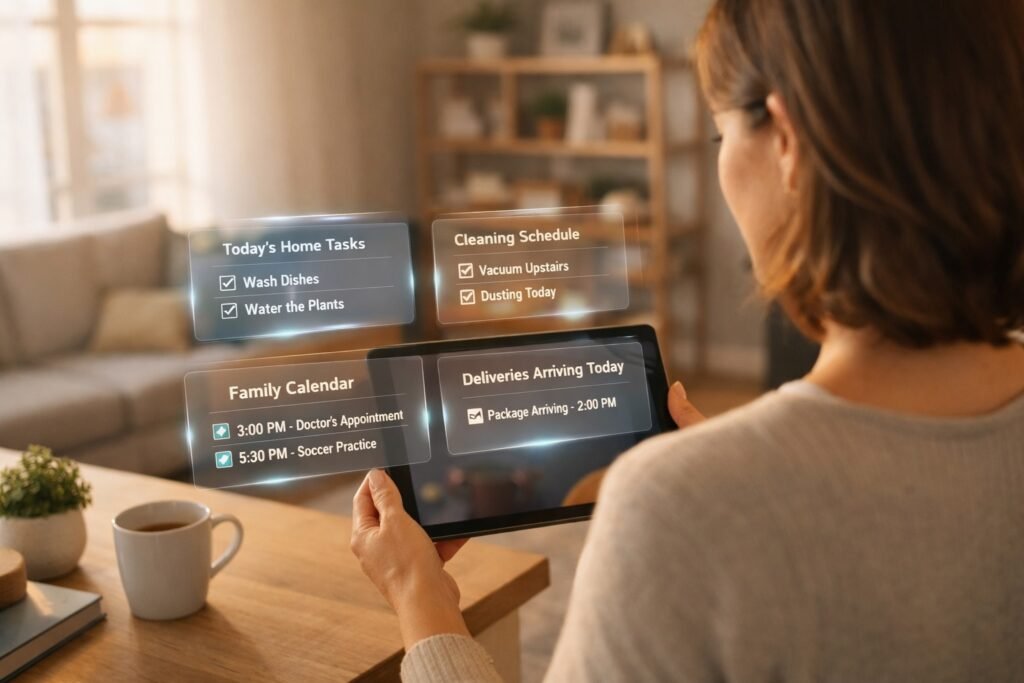
Introduction: Managing a Home Is a Full-Time Job — AI Can Help
Managing a home today involves far more than just cleaning and errands. Between chores, reminders, deliveries, schedules, and shared responsibilities, it often feels like a second full-time job. This is where AI for home management can make a meaningful difference—not by taking over your household, but by quietly supporting the routines you already have.
AI-powered home management tools help reduce mental load by handling small but important details: reminding you when trash day is coming up, keeping track of cleaning schedules, coordinating family calendars, and even monitoring routine home tasks in the background. Instead of reacting to forgotten to-dos, AI helps households stay one step ahead.
The goal of AI in the home isn’t automation for the sake of technology. It’s about creating a calmer, more organized living environment where fewer things slip through the cracks. When used thoughtfully, AI for home management becomes a practical assistant—one that brings structure to daily life without adding complexity or stress.
In this guide, you’ll learn how AI can help manage chores, reminders, cleaning routines, deliveries, and everyday household tasks. We’ll explore realistic examples, popular tools, and simple ways to start using AI at home—no technical expertise required.
What “AI for Home Management” Actually Means
AI for home management refers to using artificial intelligence to help organize, track, and support everyday household tasks. Instead of relying on memory, sticky notes, or scattered apps, AI systems quietly assist in the background—handling reminders, recognizing patterns, and helping households stay organized with less effort.
Unlike traditional smart home devices that simply follow fixed commands, AI-powered home management tools can adapt over time. They learn routines, notice recurring tasks, and provide timely suggestions that make managing a home feel more manageable and predictable.
AI as a Household Assistant, Not a Replacement
One common misconception is that AI replaces responsibility or decision-making. In reality, AI for home management works best as a support system. It doesn’t clean your home or raise your family—it helps ensure important tasks aren’t forgotten and routines stay consistent.
Think of AI as a digital assistant that keeps track of details most people don’t want to hold in their head all day. From reminding you to replace air filters to suggesting the best time to run appliances, AI helps households stay organized without removing control or personal choice.
The Difference Between Smart Devices and AI-Powered Systems
Many homes already use smart devices, but not all smart technology uses AI in a meaningful way. A smart device typically follows preset rules, like turning lights on at a certain time. AI-powered home management goes further by adjusting based on behavior, usage patterns, and changing needs.
For example, instead of running a vacuum on a fixed schedule, an AI-enabled system might adjust cleaning frequency based on foot traffic or past usage. This adaptability is what makes AI home management more helpful than simple automation.
Why AI Fits Naturally Into Daily Home Routines
Homes run on routines—morning schedules, weekly chores, monthly maintenance, and seasonal tasks. AI is particularly effective at managing routines because it excels at recognizing patterns and handling repetition.
By supporting daily habits instead of disrupting them, AI tools blend into everyday life. Over time, they reduce mental clutter, help households stay on track, and create a sense of order that makes home life feel calmer and more predictable.
Everyday Home Tasks AI Can Manage or Simplify
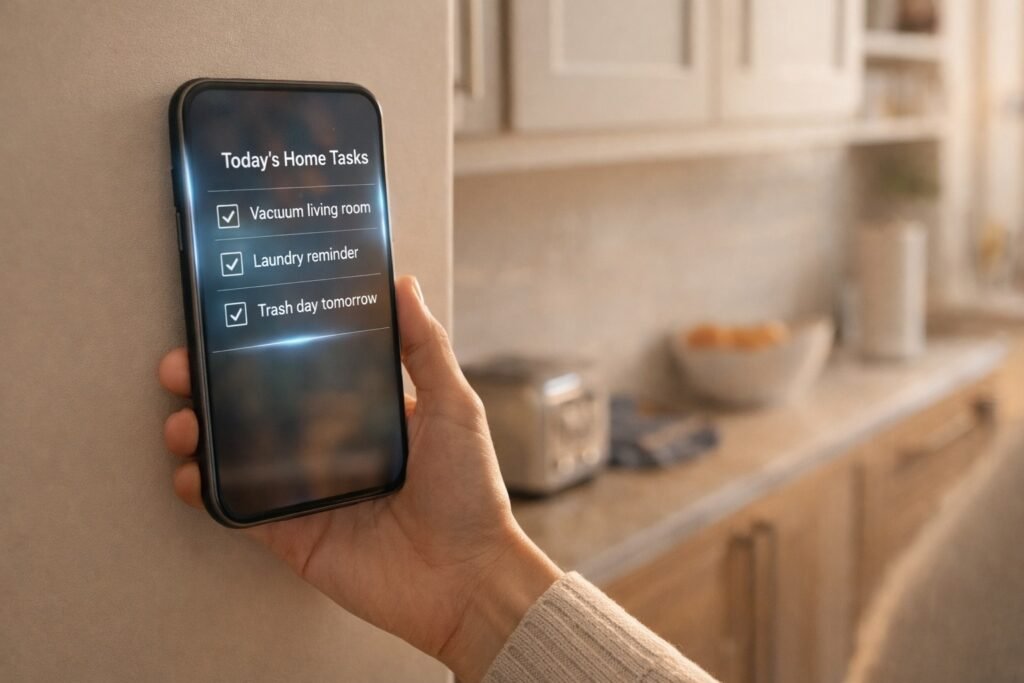
Many of the most stressful parts of home management aren’t big projects—they’re the small, repeating tasks that are easy to forget. AI for home management focuses on these everyday responsibilities, helping households stay organized without constant reminders or manual tracking.
Rather than replacing routines, AI supports them by handling timing, consistency, and follow-through in the background.
Chores and Cleaning Routines
Cleaning tasks often fall behind not because they’re difficult, but because they’re easy to postpone. AI-powered home management tools can help by creating realistic cleaning schedules that adjust to your household’s habits.
Instead of rigid calendars, AI can space out chores, send reminders at appropriate times, and coordinate with smart cleaning devices. This keeps the home consistently maintained without requiring daily decision-making about what needs to be done next.
Household Reminders and Daily To-Dos
Homes rely on dozens of small reminders—taking out the trash, changing filters, restocking supplies, or preparing for upcoming appointments. AI helps by tracking these tasks and delivering reminders before they become problems.
For example, AI home management systems can recognize recurring tasks and automatically suggest reminders, reducing the need to manually set alerts for everything. Over time, this creates a smoother, more predictable household rhythm.
Deliveries, Packages, and Subscriptions
Keeping track of deliveries and subscriptions is another area where AI proves especially useful. AI tools can monitor delivery updates, alert households when packages arrive, and help manage recurring orders for household essentials.
Instead of searching through emails or apps, AI surfaces the information you need when it matters—helping avoid missed deliveries, duplicate orders, or forgotten subscriptions.
AI for Cleaning and Household Organization
Keeping a home clean and organized is less about effort and more about consistency. AI for home management supports this by helping households create routines that are realistic, flexible, and easier to maintain over time. Instead of relying on memory or motivation, AI systems handle scheduling, reminders, and adjustments automatically.
AI-Powered Cleaning Schedules
Traditional cleaning schedules often fail because they don’t adapt to real life. AI-powered home management tools improve this by adjusting routines based on household patterns, seasonal needs, or recent activity.
For example, AI can space out deep-cleaning tasks, increase reminders during high-traffic periods, or suggest lighter maintenance when schedules are busy. This approach keeps cleaning manageable without creating pressure or guilt when routines change.
Robot Vacuums and Smart Appliances
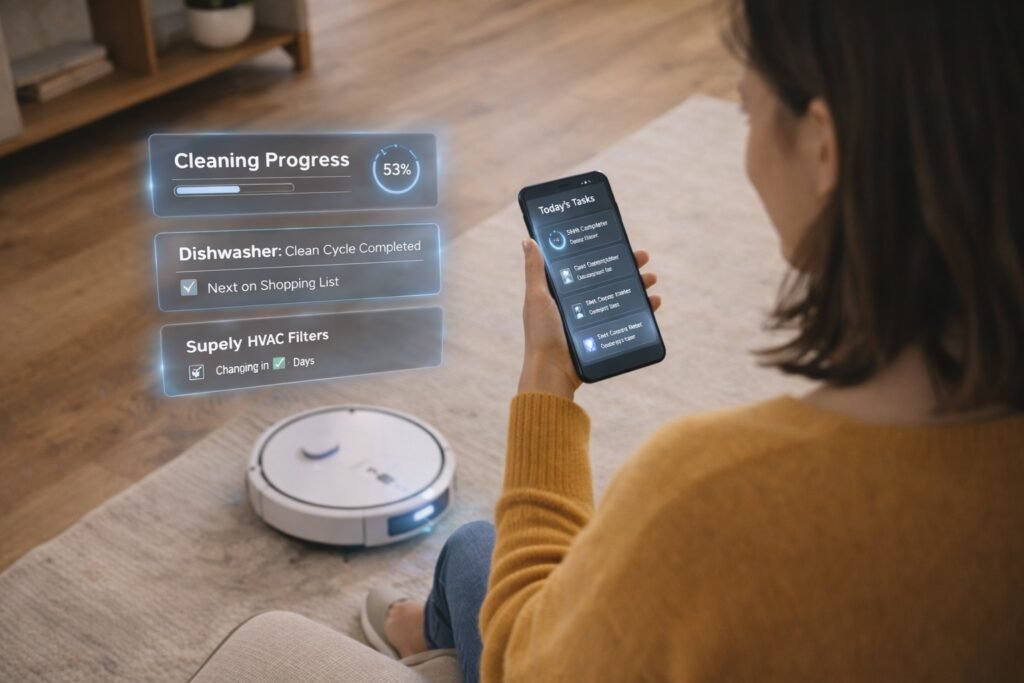
AI-enabled cleaning devices, such as robot vacuums and smart appliances, work best when they’re part of a broader home management system. Instead of running on rigid schedules, these tools can adjust based on usage, occupancy, or past cleaning cycles.
When connected to AI home management platforms, smart appliances become more responsive and efficient—handling repetitive tasks while freeing up time and attention for more meaningful activities.
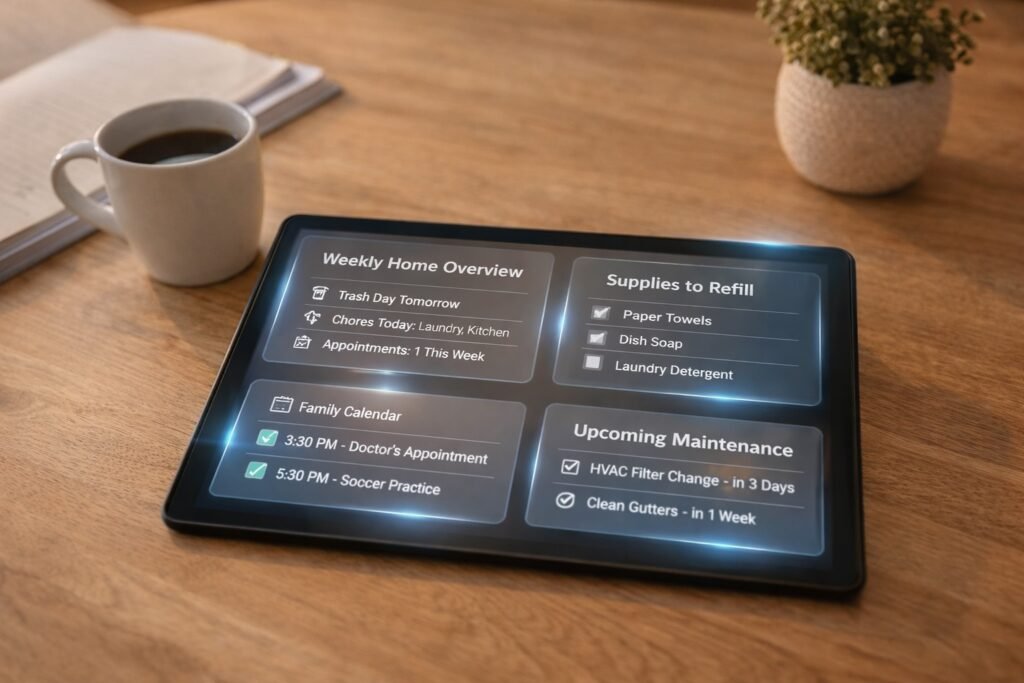
Digital Home Dashboards and Checklists
Organization goes beyond physical cleaning. AI-powered dashboards help households track tasks, supplies, and responsibilities in one place. These systems provide clear visibility into what’s been completed, what’s coming up, and what needs attention.
By centralizing information, AI reduces the mental clutter that often comes with managing a home. Rather than juggling multiple lists or apps, households can rely on a single, structured system that stays updated automatically.
AI for Family Coordination and Shared Responsibilities
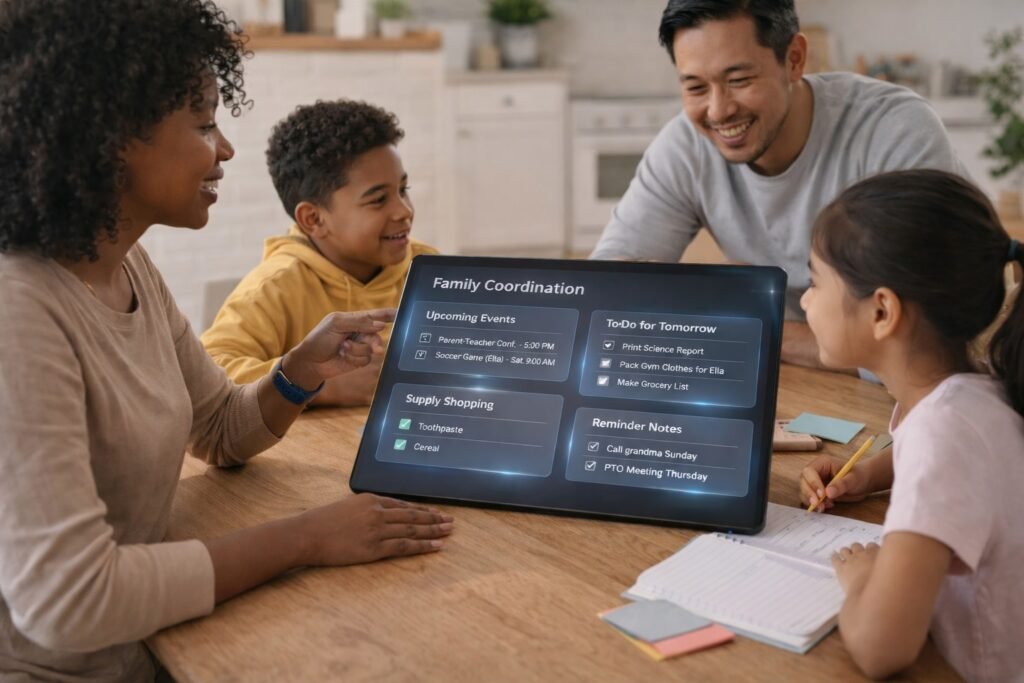
One of the biggest challenges in managing a home is coordinating people—not just tasks. When schedules overlap and responsibilities are shared, even small miscommunications can lead to missed chores, forgotten appointments, or unnecessary stress. AI for home management helps by creating a shared system everyone can rely on.
Shared Calendars and Household Task Lists
AI-powered shared calendars make it easier for families and households to stay aligned. Instead of juggling multiple schedules, AI can sync events, highlight conflicts, and send reminders to the right people at the right time.
Household task lists benefit from AI in a similar way. Tasks can be assigned, tracked, and adjusted automatically, helping ensure responsibilities are clearly defined and evenly distributed.
Assigning Chores and Tracking Completion
Chore management often breaks down when expectations aren’t clear. AI home management tools help by assigning tasks, tracking completion, and offering gentle reminders—without constant verbal follow-ups.
By making progress visible, AI reduces friction and creates accountability in a neutral, non-confrontational way. Over time, this structure helps routines feel fair and predictable.
Reducing Miscommunication and Missed Tasks
AI reduces the need for repeated reminders by acting as a central source of truth. Instead of relying on memory or last-minute messages, households can trust AI systems to surface important information automatically.
This consistency lowers stress and helps families spend less time coordinating logistics and more time focusing on shared moments at home.
AI for Home Safety, Monitoring, and Peace of Mind
Beyond organization and scheduling, AI for home management can also provide greater safety and reassurance. Instead of constant monitoring, AI systems focus on awareness—alerting households only when something needs attention.
Smart Alerts and Activity Detection
AI-powered monitoring tools can detect unusual activity and send timely alerts without overwhelming users. Rather than relying on continuous notifications, these systems learn normal patterns and only flag changes that matter.
This might include detecting unexpected movement, noticing doors opening at unusual times, or identifying patterns that suggest a routine has been disrupted.
AI-Powered Cameras and Sensors
Home cameras and sensors become more effective when paired with AI. Instead of simply recording footage, AI can analyze activity and highlight relevant events, saving time and reducing the need to review everything manually.
Used responsibly, these tools provide helpful insights while allowing households to stay informed without feeling constantly watched.
Practical Limits and Privacy Considerations
While AI can enhance home safety, it’s important to understand its limits. AI for home management works best when paired with thoughtful privacy settings and clear boundaries.
Choosing tools that prioritize data protection, allow customization, and give users control over alerts ensures AI remains a helpful assistant rather than an intrusion. Responsible use keeps home monitoring focused on peace of mind—not surveillance.
Popular AI Home Management Tools (Examples)
There is no single app or device that manages every aspect of a household. Instead, AI for home management typically works as a collection of tools that support different routines. The key is choosing tools that fit your household’s needs without creating unnecessary complexity.
Voice Assistants and Home Hubs
Voice assistants and home hubs often serve as the foundation of AI home management. They help centralize reminders, schedules, and simple commands in one place. Over time, these systems learn routines and can proactively suggest helpful actions, such as reminders or status updates.
Used thoughtfully, home hubs become a convenient way to interact with household systems without adding more screens or apps to manage.
Cleaning and Maintenance Tools
AI-powered cleaning and maintenance tools focus on consistency rather than perfection. These tools can manage cleaning schedules, coordinate smart devices, and track recurring maintenance tasks like filter changes or supply replacements.
By handling the timing and reminders, AI reduces the mental effort required to keep up with routine home care.
Family Organization Apps
Family organization apps use AI to help manage shared calendars, task assignments, and reminders across multiple people. These tools keep everyone aligned while reducing back-and-forth communication.
Rather than replacing family coordination, AI supports it by providing structure, visibility, and gentle accountability—making household responsibilities easier to manage collectively.
How to Start Using AI for Home Management
Getting started with AI for home management doesn’t require a fully automated house or a long setup process. The most effective systems begin small and grow gradually as routines become more established.
Identify the Biggest Friction Points in Your Home
Start by noticing where your household feels disorganized or stressful. This might include forgotten chores, missed reminders, cluttered schedules, or repeated conversations about the same tasks.
AI works best when it’s applied to specific problems. Choosing one or two friction points helps avoid overcomplicating your home with tools you don’t actually need.
Start With One or Two Simple Automations
Rather than automating everything at once, begin with a few low-effort tasks. This could be setting up recurring reminders, creating a shared task list, or scheduling routine cleaning support.
Simple automations deliver immediate value and help build confidence. Once these feel natural, additional layers can be added without overwhelming the household.
Build Routines Gradually Over Time
AI home management systems become more useful as they learn routines. Giving tools time to adapt allows schedules and reminders to become more accurate and helpful.
By building routines gradually, AI remains a supportive background system—enhancing daily life instead of disrupting it.
Real-Life Example: A Smarter, Calmer Household with AI
To understand the impact of AI for home management, it helps to see how it fits into real daily life. In many households, AI works quietly in the background, supporting routines rather than demanding attention.
Morning Routines Run Automatically
Instead of starting the day by checking lists or remembering tasks, the household begins with gentle prompts. AI-managed reminders highlight what needs attention—upcoming appointments, scheduled chores, or deliveries expected later in the day.
This reduces decision-making early in the morning, helping the day start with clarity instead of stress.
Fewer Forgotten Tasks and Reminders
As the day progresses, AI systems track recurring responsibilities without constant input. Trash reminders, cleaning schedules, and maintenance alerts surface at the right time, preventing small oversights from becoming larger issues.
Because tasks are managed consistently, fewer things fall through the cracks—even during busy or unpredictable weeks.
More Time for Family, Less Mental Clutter
Perhaps the biggest benefit of AI home management is what it removes: mental overload. With fewer reminders to juggle and less coordination required, households gain back time and energy.
Instead of managing logistics, families can focus more on shared moments—knowing the system supporting their home is running quietly and reliably.
Common Concerns About AI in the Home
As AI for home management becomes more common, it’s natural for households to have questions and concerns. Understanding what AI can and cannot do helps ensure it’s used in a way that feels comfortable, safe, and practical.
Is AI Safe to Use for Household Management?
When chosen carefully, AI home management tools can be safe and reliable. Most reputable systems allow users to control data sharing, customize alerts, and limit access to sensitive information.
Safety comes from transparency and choice. Using tools that clearly explain how data is handled and allowing users to adjust privacy settings helps maintain confidence and control.
Does AI Make Homes Overly Automated?
AI does not have to mean a fully automated home. In fact, many households benefit most from minimal automation that supports routines without removing flexibility.
AI for home management works best when it complements human decision-making rather than replacing it. Users remain in control of what gets automated and when.
What AI Can’t Do (Important Boundaries)
AI can organize tasks, provide reminders, and identify patterns—but it cannot understand personal context in the same way people do. It also cannot replace communication, judgment, or emotional awareness.
Recognizing these boundaries ensures AI remains a helpful tool rather than an unrealistic solution to every household challenge.
Final Thoughts: Why AI for Home Management Is About Simplicity

The purpose of AI for home management isn’t to turn homes into high-tech systems or eliminate human involvement. It’s about making everyday life easier by reducing the mental effort required to keep things running smoothly.
Small Automations Create Big Relief
Even simple AI-supported routines—like recurring reminders, shared task lists, or cleaning schedules—can significantly reduce stress. When small responsibilities are handled consistently, households experience fewer disruptions and less frustration.
Over time, these small improvements add up to a more organized and predictable home environment.
AI as a Quiet Background Helper
The most effective AI tools don’t demand attention. They work quietly in the background, offering support only when it’s needed. This subtle presence helps households stay on track without feeling controlled or overwhelmed.
When AI feels invisible, it’s usually doing its job well.
Encouragement to Start Small
There’s no need to adopt every tool at once. Starting with one area—chores, reminders, or scheduling—allows AI to integrate naturally into daily routines.
By focusing on simplicity and control, AI for home management becomes a practical, supportive companion that helps households feel calmer, more organized, and more in control of everyday life.
This topic fits into a broader look at how AI for everyday life supports daily routines across home, work, and family life.