
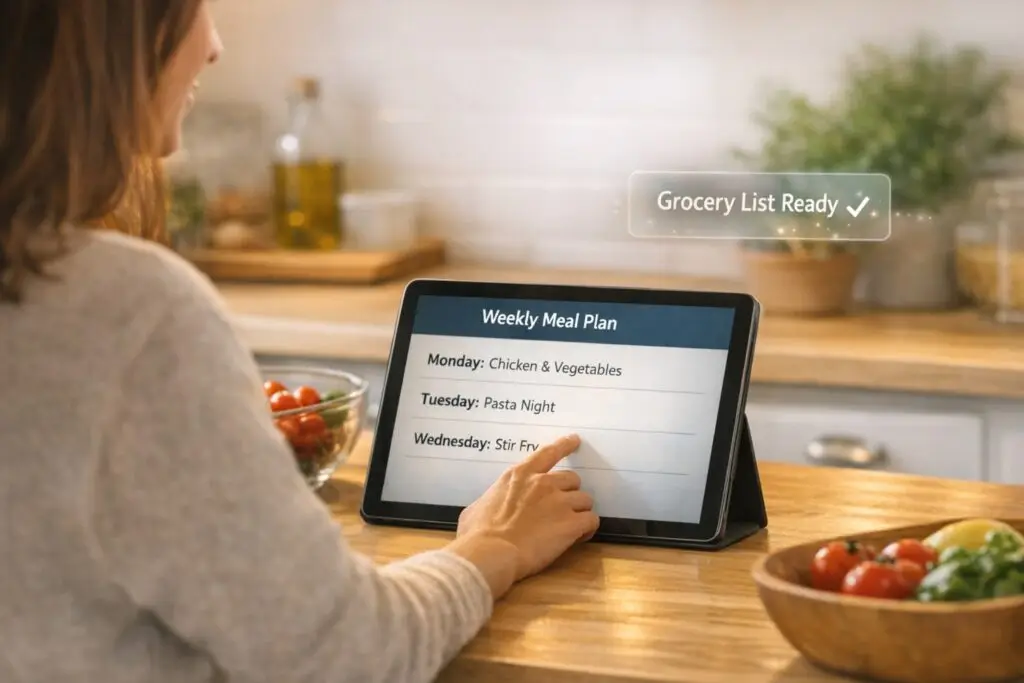
Meal planning is one of those everyday tasks that sounds simple but often feels mentally exhausting. Deciding what to cook, balancing preferences, staying within a budget, and remembering everything needed at the store can quickly become overwhelming. Using AI to assist with meal planning helps turn this scattered process into a calm, repeatable routine. If you’ve been curious about how to use AI for meal planning, this guide walks through how artificial intelligence can suggest meals, organize grocery lists, reduce food waste, and make weekly planning easier—without removing flexibility or personal choice.
What AI-Powered Meal Planning Looks Like

At its core, AI-assisted meal planning is about reducing friction. Instead of starting from a blank slate each week, intelligent tools help organize decisions you already make.
How Intelligent Tools Assist with Weekly Meals
AI works by using basic inputs—such as food preferences, household size, and time constraints—to suggest meals that fit your routine. The goal isn’t perfection, but guidance.
Why This Approach Reduces Stress and Decision Fatigue
When fewer decisions are left until the last minute, mental energy is preserved for more important parts of daily life.
Who Benefits Most from AI-Assisted Meal Planning
This approach works especially well for busy families, individuals trying to eat more consistently, and anyone tired of repeating the same planning cycle each week.
Why Meal Planning Is a Natural Fit for AI
Some daily tasks are better suited to automation than others. Planning meals happens frequently, follows patterns, and benefits from structure—making it ideal for AI support.
Reducing Daily Decisions Around Food
Instead of deciding what to eat every day, planning once per week lightens the mental load.
Avoiding Last-Minute Meals and Grocery Trips
When meals are planned ahead of time, emergency shopping runs and takeout become less common.
Supporting Calmer Household Routines
Knowing what’s for dinner in advance helps evenings feel more predictable and less rushed.
How to Use AI for Meal Planning Step by Step
You don’t need advanced tools or complicated systems to get started.
Setting Food Preferences and Constraints
Begin by sharing basic information such as:
- Foods you enjoy or avoid
- Dietary needs or allergies
- How many meals you want planned
Clear inputs lead to more useful suggestions.
Creating a Flexible Weekly Plan
AI can suggest a full week of meals or provide options you choose from. The key is flexibility—not rigid schedules.
Making Quick Adjustments When Plans Change
If something unexpected comes up, AI can easily swap meals or suggest faster alternatives.
Using AI as Support, Not Control
The best results come from treating AI as an assistant, not an authority. You always make the final decision.
Turning Meal Ideas into Grocery Lists with AI
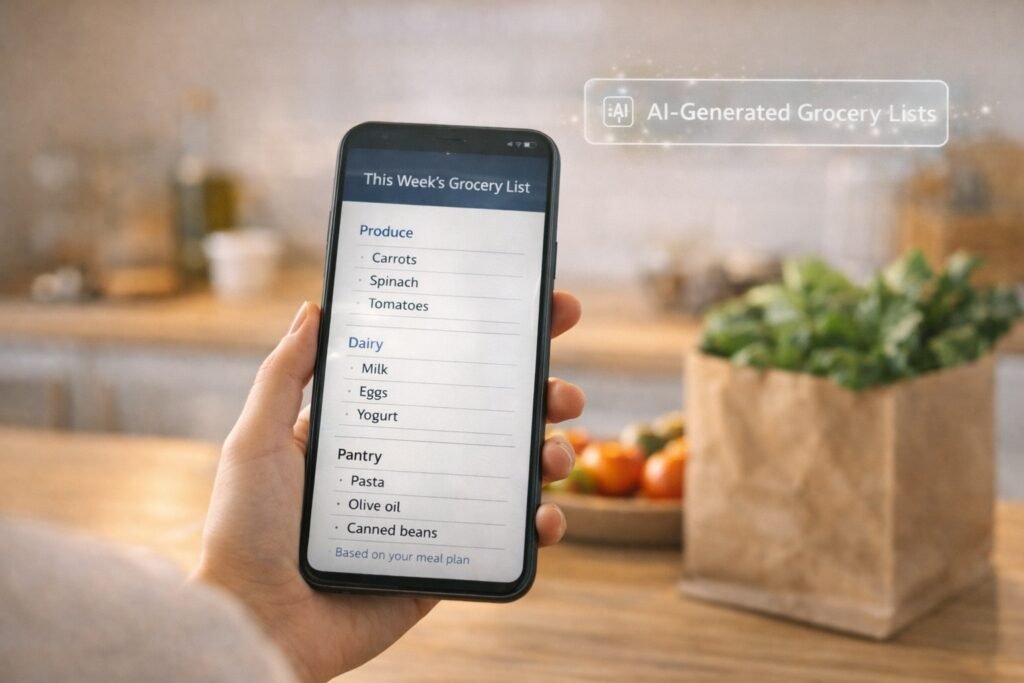
One of the most practical benefits of AI-assisted planning is automatically generated shopping lists.
Automatically Generating Shopping Lists from Meals
Once meals are selected, ingredients can be pulled into a list instantly—saving time and effort.
Grouping Items by Store Section
Many tools organize items by category, making shopping faster and more efficient.
Reusing Pantry Staples Efficiently
AI can prioritize ingredients you already have, helping reduce unnecessary purchases.
Preventing Forgotten Ingredients
Because lists are built directly from meal ideas, fewer items are missed.
Saving Money with AI-Assisted Meal Planning
Planning meals ahead of time often leads to noticeable savings.
Planning Meals Around a Weekly Budget
AI can suggest meals that fit within a specific budget or adjust ingredients to lower costs.
Reducing Food Waste at Home
Better planning means fewer unused ingredients and less spoiled food.
Ingredient Swaps That Lower Costs
If an item is expensive or unavailable, AI can recommend practical alternatives.
AI Meal Planning for Families and Busy Households

Families often face added complexity when planning meals, making AI support especially helpful.
Planning Around Busy Family Schedules
Meal ideas can be matched to evenings with limited time or packed schedules.
Making Meals Kid-Friendly Without Extra Work
AI can suggest familiar, simple options while still encouraging variety.
Handling Preferences and Picky Eaters
Instead of one rigid plan, AI helps create flexible options that accommodate different tastes.
Supporting Health and Wellness Through Meal Planning
Consistency matters more than perfection when it comes to healthy eating.
Encouraging Balanced Nutrition
AI can help distribute proteins, vegetables, and variety across the week.
Adjusting Meals for Dietary Needs
Specific diets—such as vegetarian, gluten-free, or allergy-aware—can be accommodated with clear instructions.
Building Consistent Eating Routines
Regular planning supports better habits without constant tracking or pressure.
Tools That Help with Meal Planning and Shopping
You don’t need a single specialized app to get started.
Recipe and Idea Generators for AI Meal Planning
General AI assistants can suggest meals based on ingredients, preferences, or time limits.
Grocery and Shopping Assistant Apps
Some apps use predictive tools to suggest restocks or optimize shopping trips.
When General AI Tools Are Enough
For many people, free tools already provide everything needed to plan meals effectively.
A Realistic Example of a Week Using AI
Here’s what a typical week might look like in practice.
Planning Meals in Minutes
A short prompt generates several dinner ideas tailored to the household.
Creating the Shopping List Automatically
Ingredients are compiled into an organized list with minimal effort.
Updating Plans Midweek
When schedules shift, the plan adjusts quickly—no full restart required.
FAQ
Is This Approach Safe for Families?
Yes. This type of AI use is organizational and informational, not intrusive.
Can Allergies and Preferences Be Handled?
As long as needs are clearly stated, AI can adapt suggestions accordingly.
Do You Need Paid Tools?
Many people start successfully with free options.
Does AI Replace Nutrition Professionals?
No. AI supports planning but does not replace expert medical or dietary advice.
Final Thoughts

Using AI to assist with meal planning is one of the simplest ways to bring artificial intelligence into everyday life.
Why This Is an Easy Everyday Use of AI
It fits naturally into routines you already have.
Small Changes That Make a Big Difference
Even partial use—like generating grocery lists—can reduce stress.
How to Get Started This Week
Start small, stay flexible, and let AI reduce effort—not replace judgment.
This topic fits into a broader look at how AI for everyday life supports daily routines across home, work, and family life.