
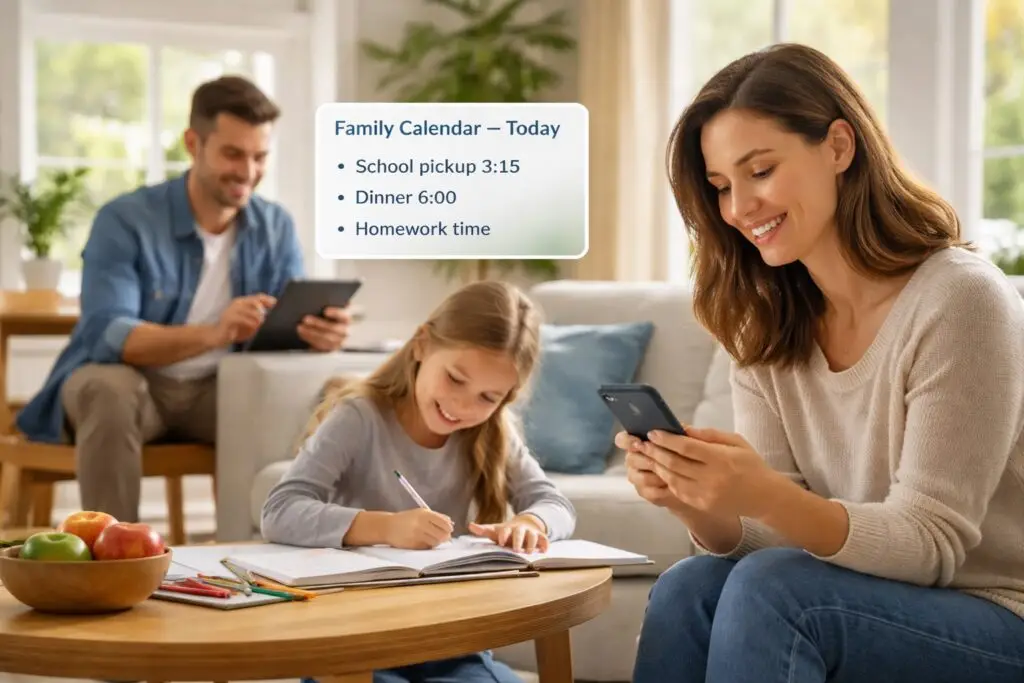
Artificial intelligence is no longer something reserved for tech companies or science fiction movies. It’s already part of everyday family life—helping with navigation, recommending shows, organizing calendars, filtering spam, and supporting kids’ learning. As AI becomes more common at home, many parents are asking an important question: is AI safe for everyday family use?
This concern is completely reasonable. New technology often brings uncertainty, especially when it affects children, privacy, and daily routines. The good news is that most everyday AI tools are designed to be low-risk, supportive, and optional, not invasive or dangerous.
This guide breaks down what AI safety really means for families, where AI already shows up in daily life, what risks are real (and which are often exaggerated), and how families can use AI confidently and responsibly—without fear or hype.
Why Families Are Asking If AI Is Safe

AI Is Everywhere—But Understanding Hasn’t Kept Up
AI adoption has outpaced public understanding. Tools powered by AI are now built into phones, apps, cars, and home devices, often without being clearly labeled as “AI.” When something becomes invisible but powerful, it naturally raises concern.
Families don’t want to opt into something they don’t understand—especially when kids are involved.
Common Fears Parents Have About AI
Some of the most common worries include:
- Will AI collect too much personal data?
- Can kids become overly dependent on AI?
- Is AI giving inaccurate or inappropriate information?
- Is AI replacing human judgment or parenting?
These are valid questions—but they often get answered inaccurately online.
Media Headlines vs. Real-World AI Use
Headlines tend to focus on extreme or experimental uses of AI. In reality, everyday consumer AI—the kind families use—is intentionally limited, heavily regulated, and designed to assist rather than replace humans.
Understanding this distinction is key to feeling confident about AI at home.
What “Safe AI” Actually Means for Everyday Life
Safety vs. Privacy vs. Ethics (And Why They’re Different)
When people ask is AI safe for everyday family use, they’re usually talking about a combination of privacy, reliability, and how much control families maintain. AI safety is often discussed as one big concept, but it’s helpful to break it down:
- Safety: Does the tool cause harm or encourage risky behavior?
- Privacy: How is personal data collected, stored, and used?
- Ethics: Is the AI designed responsibly, without manipulation or exploitation?
Most family-focused AI tools are built with clear guardrails in all three areas.
Consumer AI vs. Experimental or Enterprise AI
Everyday AI tools (like navigation apps, calendars, or learning platforms) are very different from experimental AI used in research labs or large corporations.
Consumer AI is:
- Narrow in scope
- Designed for specific tasks
- Heavily tested
- Governed by privacy laws and app-store rules
This makes it far safer than many people assume.
Why Most Everyday AI Tools Are Low-Risk
Everyday AI typically:
- Suggests rather than decides
- Assists rather than replaces
- Requires human confirmation
- Can be turned off or ignored
In other words, families stay in control.
Where Families Already Use AI (Often Without Realizing It)
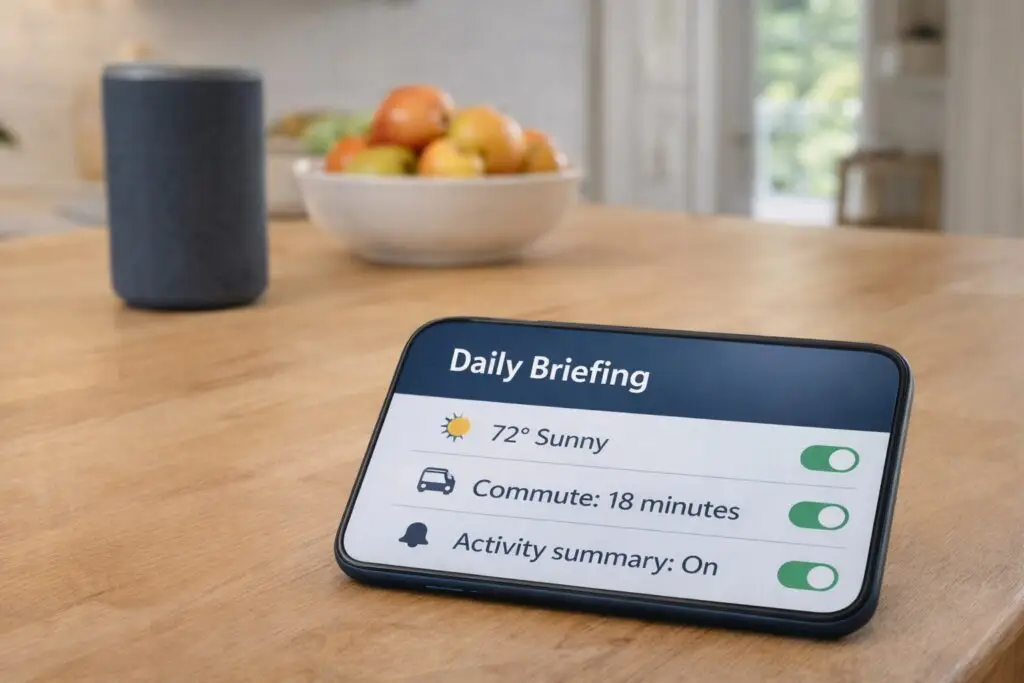
Smartphones, Voice Assistants, and Smart Homes
AI powers features like:
- Voice commands (“Set a reminder”)
- Spam call filtering
- Predictive text and autocorrect
- Smart thermostats and lighting
These systems react to inputs—they don’t act independently.
Streaming, Shopping, and Recommendations
When Netflix suggests a show or Amazon recommends a product, that’s AI analyzing patterns—not spying on conversations.
School Platforms and Learning Apps
Many educational tools use AI to:
- Adjust difficulty levels
- Suggest practice areas
- Provide explanations
Used correctly, this supports learning rather than replacing it.
Navigation, Calendars, and Scheduling
AI helps families:
- Avoid traffic
- Remember appointments
- Coordinate busy schedules
These are some of the safest and most practical uses of AI.
Is AI Safe for Children and Teens in Everyday Family Life?
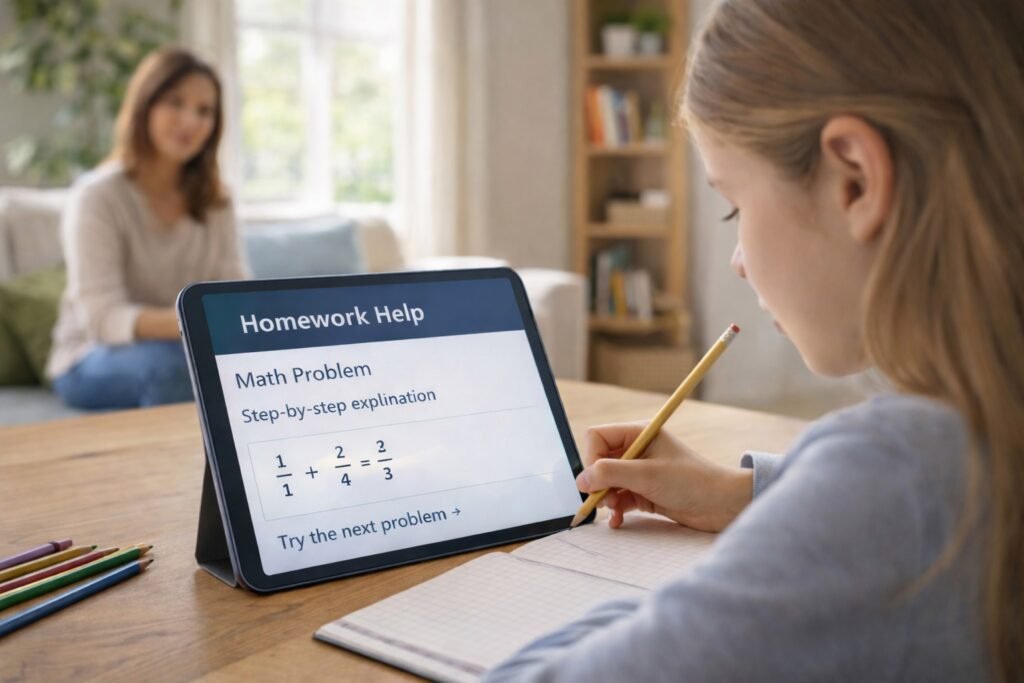
Age-Appropriate AI Use Explained Simply
A major part of answering is AI safe for everyday family use involves understanding how children and teens interact with AI tools differently than adults. AI can be safe for kids when:
- Tools are age-appropriate
- Adults guide usage
- AI is treated as a helper, not an authority
For younger children, AI should support routines and learning—not open-ended exploration.
AI as Learning Support, Not Thinking Replacement
AI works best when it:
- Explains concepts
- Offers examples
- Helps kids practice
It should never replace critical thinking, curiosity, or human interaction.
Risks to Watch For (Without Panic)
Potential risks include:
- Over-reliance on answers
- Exposure to inaccurate information
- Excessive screen time
These risks are manageable with basic boundaries—just like any technology.
How Parental Controls Actually Help
Many family-friendly tools offer:
- Content filtering
- Time limits
- Activity summaries
- Supervised modes
Used together, these features provide meaningful oversight.
Privacy Concerns Families Should Understand (Without Panic)
What Data Everyday AI Tools Typically Collect
Most collect:
- Usage patterns
- Basic preferences
- Anonymous performance data
This helps tools function better—not identify individuals personally.
What They Usually Don’t Collect
Most family-focused AI tools do not:
- Listen constantly
- Store private conversations
- Access unrelated personal files
How to Read Privacy Settings Simply
Look for:
- Clear language (not legal jargon)
- Opt-out options
- Data deletion controls
If settings are confusing or hidden, that’s a red flag.
Simple Privacy Habits Every Family Can Follow
- Use strong passwords
- Review app permissions
- Avoid oversharing personal details
- Talk with kids about digital boundaries
These habits matter more than the AI itself.
AI Myths That Cause Unnecessary Fear
“AI Is Always Listening”
Most devices activate only after a wake word or tap. They aren’t recording everything.
“AI Replaces Human Judgment”
AI suggests. Humans decide. This is a core design principle of consumer AI.
“AI Tools Are Unsafe by Default”
Reputable AI tools go through app-store reviews, compliance checks, and constant updates.
Why Everyday AI Isn’t Sci-Fi AI
Real AI is limited, narrow, and task-focused—not autonomous or conscious.
How to Use AI Safely and Responsibly at Home

Start With Narrow, Practical Use Cases
Examples:
- Shared calendars
- Homework explanations
- Grocery lists
- Routine reminders
Avoid overwhelming the household with too many tools at once.
Use AI as Assistance—Not Authority
AI should support decisions, not make them.
Keep Humans in the Loop
Parents remain responsible for:
- Final decisions
- Values
- Boundaries
- Context
Set Family Norms Around AI Use
Discuss:
- When AI is helpful
- When to double-check answers
- When to unplug
This builds digital literacy—not fear.
Examples of Safe, Helpful AI Use in Family Life
Family Scheduling and Shared Calendars
AI reduces mental load by organizing commitments.
Homework Support and Learning Explanations
AI helps explain concepts without doing the work for kids.
Meal Planning, Grocery Lists, and Budgeting
AI simplifies planning and saves time.
Routine Reminders and Organization
From chores to bedtime routines, AI helps families stay consistent.
Choosing Safe, Family-Friendly AI Tools
What to Look For Before Installing an AI App
- Clear purpose
- Transparent privacy policy
- Simple controls
- Human-centered design
Red Flags to Avoid
- Vague data practices
- No parental controls
- Overly aggressive notifications
- Claims that sound “too powerful”
Free vs. Paid Tools—Does Cost Matter?
Paid tools often offer:
- Better privacy
- Fewer ads
- More control
But many free tools are safe when used thoughtfully.
The Future of AI Safety for Families
Why Consumer AI Safety Is Improving
Regulation, public scrutiny, and competition are pushing companies to prioritize safety.
Built-In Guardrails Are Becoming Standard
Content filters, transparency, and user controls are now expected features.
What Families Should Expect Next
More personalization, better explanations, and stronger privacy tools—not runaway AI.
FAQ: AI Safety for Everyday Family Use
Is AI safe for everyday family use right now?
Yes, when used intentionally and with basic awareness.
Should kids be allowed to use AI tools?
Yes—with guidance, age-appropriate tools, and boundaries.
Can AI replace parenting or teaching?
No. AI supports humans—it doesn’t replace them.
What’s the safest way to start using AI at home?
Start small, stay involved, and keep conversations open.
Why families ask if AI is safe for everyday use
Families ask whether AI is safe for everyday use because it has become part of daily life faster than most people realize. AI now helps manage schedules, recommend content, assist with homework, and organize household routines—often without being clearly labeled as “AI.” When technology becomes both powerful and invisible, it naturally raises questions about safety, privacy, and long-term impact.
Parents are also rightfully cautious about tools that affect children. Concerns about data privacy, screen time, misinformation, and over-reliance on technology are common—and healthy. Asking whether AI is safe reflects a desire to stay informed and protect family values, not fear of technology itself.
In reality, most everyday AI tools are designed to be narrow, supportive, and user-controlled. They don’t make independent decisions, replace parenting, or operate without human input. Understanding how these tools work—and where their limits are—helps families move from uncertainty to confident, responsible use.
Final Thoughts: Calm, Confident AI Use at Home
Why Fear Isn’t Required—But Awareness Is
AI doesn’t need blind trust or fear. It needs understanding.
AI as a Supportive Household Tool
Used thoughtfully, AI reduces stress, saves time, and supports family routines.
Moving Forward Thoughtfully
AI is already part of everyday life. Families who learn to use it calmly and responsibly are best positioned to benefit—today and in the future.
This topic fits into a broader look at how AI for everyday life supports daily routines across home, work, and family life.